
Although all the standards listed above can be used as references for composite material compression tests, it can be seen from their titles that each standard has a different emphasis.
Taking the commonly used ASTM D6641 Standard Test Method for Compressive Properties of Polymer Matrix Composite Laminates Using a Combined Loading Compression (CLC) Test Grip and ASTM D3410 *Standard Test Method for Compressive Properties of Polymer Matrix Composite Materials with Unsupported Gage Section as examples, the core difference between the two standards lies in the loading methods during testing: ASTM D6641 adopts a combined loading mode of “end loading + shear loading”, whereas ASTM D3410 employs pure shear loading.
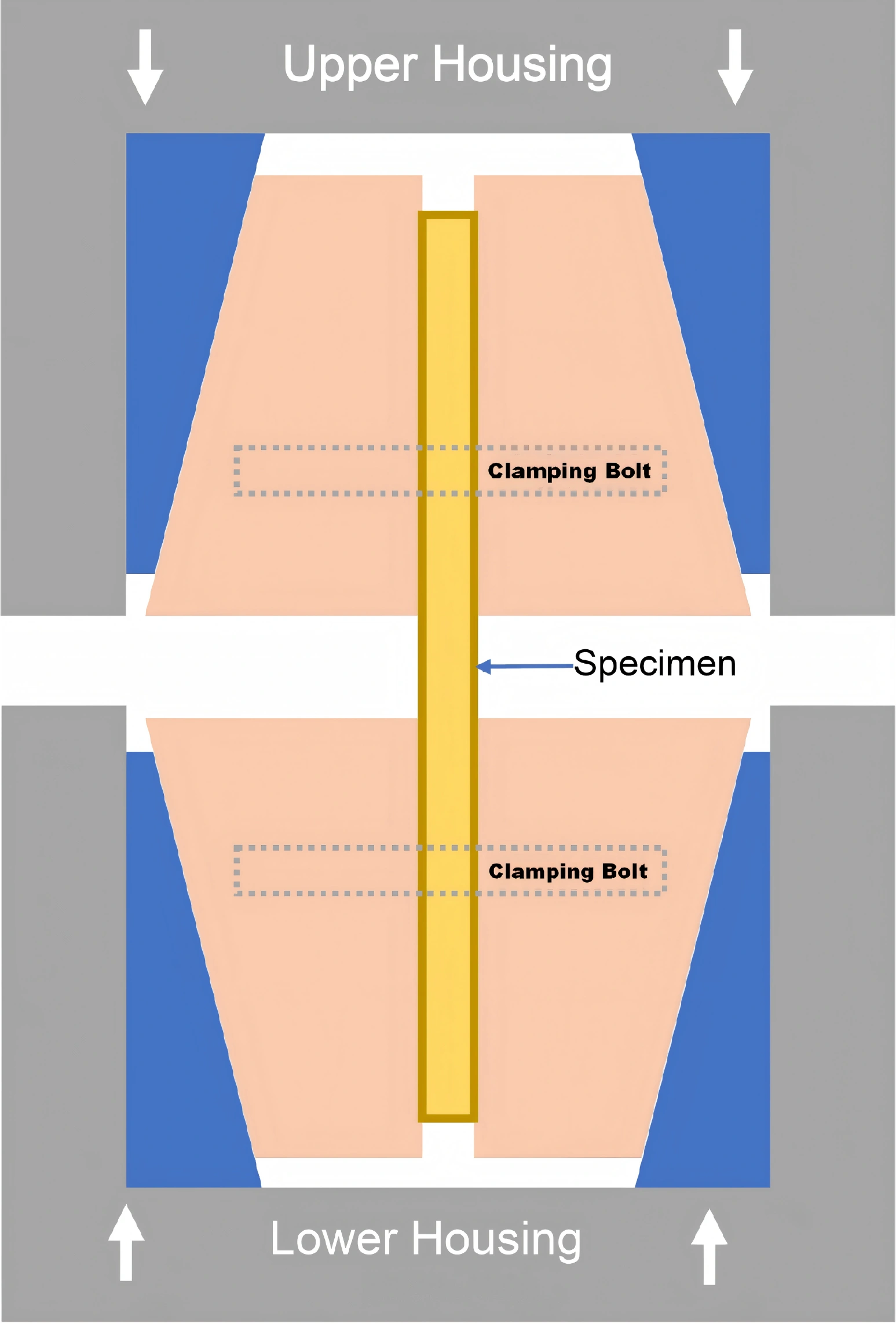
Figure 1: Schematic Diagram of Pure Shear Loading Principle for ASTM D3410
The combined loading mode of ASTM D6641 not only minimizes specimen end crushing during testing but also reduces the influence of shear stress concentration, ensuring a uniform stress state.
This method is applicable for compressive property testing of high-strength, high-modulus continuous fiber-reinforced composites, especially unidirectional laminates and laminated plates, and features a wide range of material applicability.
ASTM D6641 is primarily used to determine the following properties:
- Compressive strength: the maximum compressive stress a specimen can withstand during a compression test.
- Compressive (elastic) modulus: the slope of the stress compression curve over a specified strain interval within the elastic region.
- Strain at maximum load or failure strain: the compressive strain at which compressive strength is reached.
- Yield performance (if applicable): the stress value at which the composite material begins to undergo plastic deformation.
- Poisson’s ratio: the negative ratio of transverse strain to axial strain under uniaxial loading, used to characterize the lateral contraction or expansion behavior of the material (obtaining this parameter is not a mandatory requirement of ASTM D6641).
The pure shear loading mode of ASTM D3410 completely eliminates end loading during testing, making it suitable for high-performance composite materials sensitive to end failure. This method is specifically designed to determine the in-plane compressive properties of high-modulus fiber-reinforced polymer matrix composites.
This method can be used to measure the following material properties: ultimate compressive strength, ultimate compressive strain, compressive elastic modulus, compressive chord modulus, compressive Poisson’s ratio, transition strain, and secant modulus.
Testing Equipment
For compression tests conducted on standard specimens in accordance with ASTM D6641 and ASTM D3410, as well as many other standardized test methods for fiber-reinforced plastics, a 100 kN to 300 kN electronic universal testing machine is generally sufficient.
SINOTEST provides an advanced solution suite for the performance testing of composite materials.
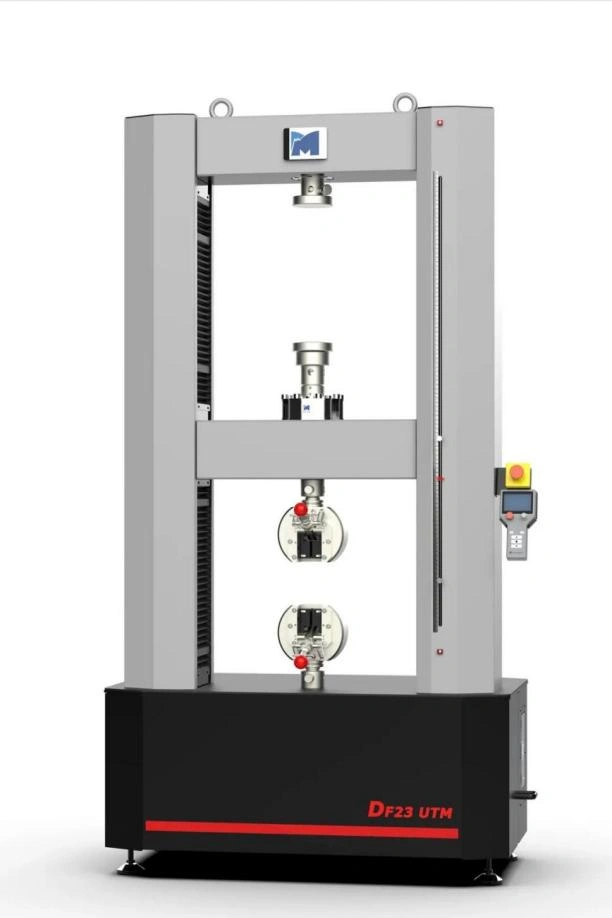
The solution adopts the SINOTEST DF Series Electronic Universal Testing Machine, which can perform composite material tensile tests in accordance with GB, ASTM, ISO and other industrial standards, featuring industry-leading accuracy and reliability.
- Strong compatibility: Capable of meeting composite material tests of various types and standards.
- Modular design: Allows quick replacement of composite material grips to adapt to test conditions under different standards.
- High precision: Achieves Class 0.5 measurement accuracy.
- Custom grip adaptability: Can be equipped with non-standard grips for composite specimens of special dimensions.
- Wide speed range of the mainframe: Satisfies most test speed requirements.
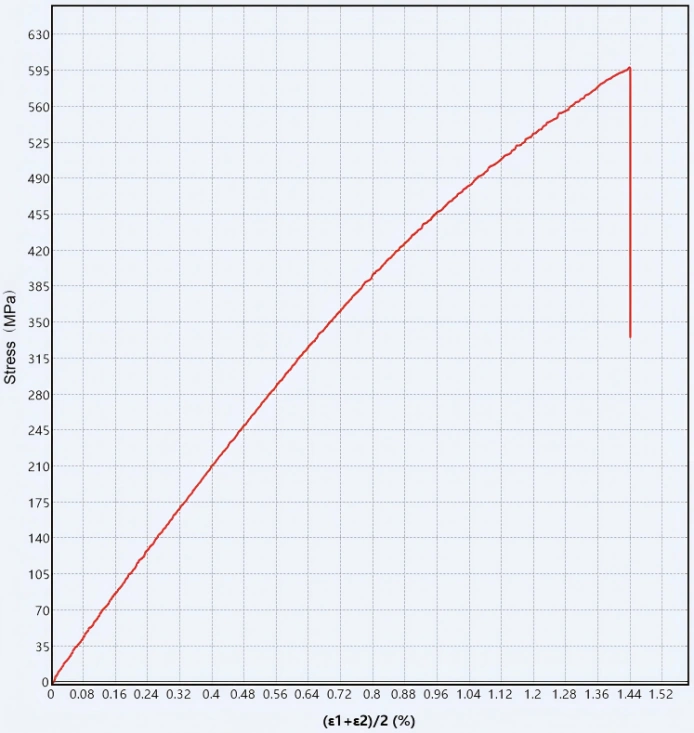
Stress-Compression Curve
Figure 3: Stress-Compression Curve Generated by SINOTEST Solution in Accordance with ASTM D6641
Force-Time Curve
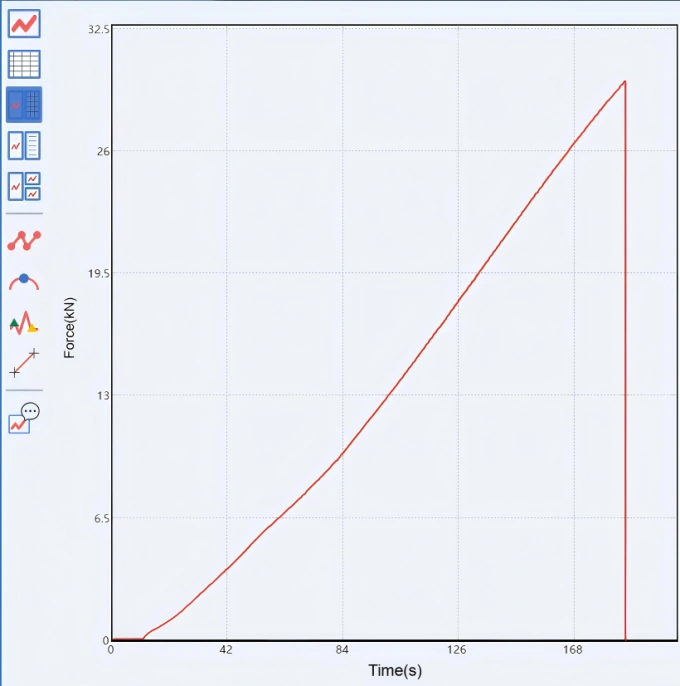
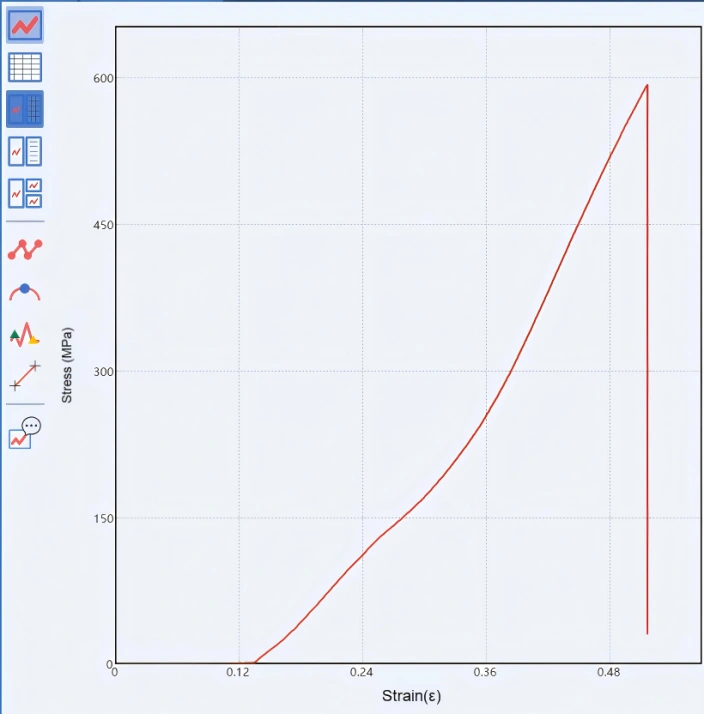
Stress-Strain Curve
Figure 4: Test Curve Obtained by SINOTEST Solution in Accordance with ASTM D3410
Grip Selection
When conducting compression tests on composite specimens, appropriate grips shall be selected according to different standards.
For example, ASTM D6641 specifies the use of Combined Loading Compression (CLC) grips to achieve combined “end loading + shear loading”.
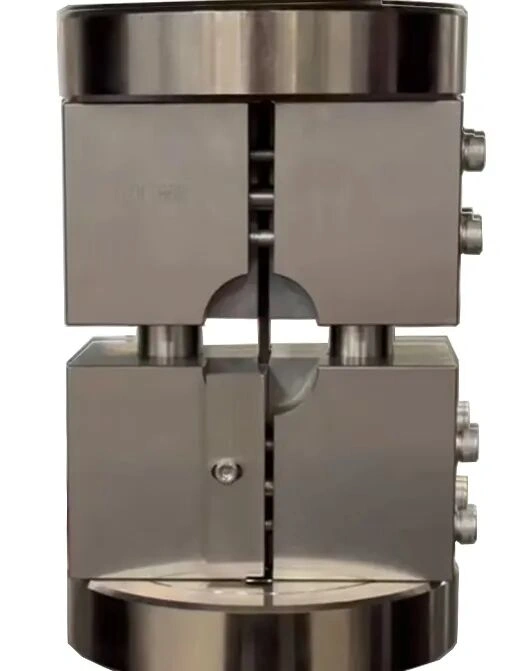
Figure 5: Combined Loading Compression (CLC) grip
ASTM D3410 requires the use of IITRI Grips, which convert the axial force applied by the testing machine platens into shear force on the parallel section (gauge section) of the specimen via internal wedges, thereby achieving pure shear loading.
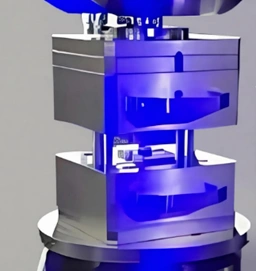
Figure 6: IITRI Grip
SINOTEST offers a variety of modular grips for composite material compression testing, suitable for testing requirements involving multiple force levels and temperature ranges.
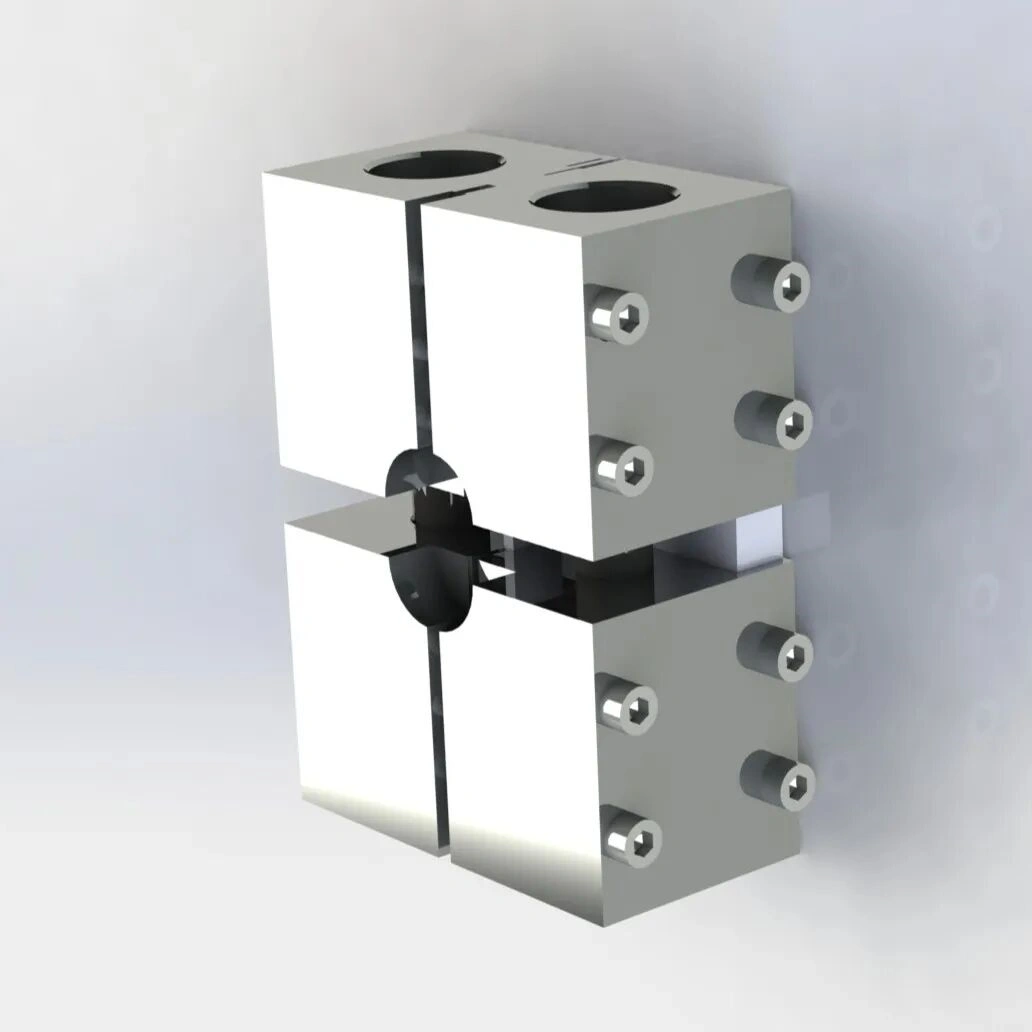
Figure 7: SINOTEST Special Grip for ASTM D6641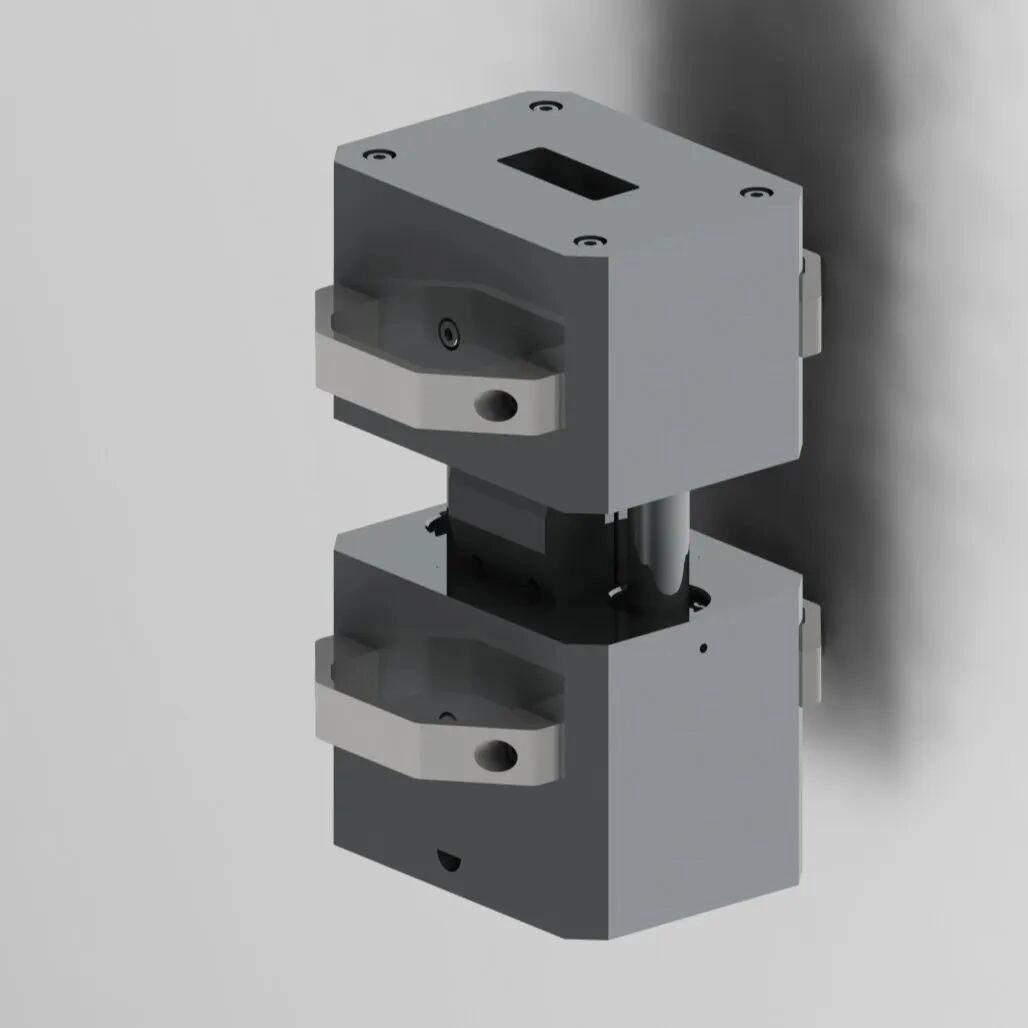
Figure 8: SINOTEST Special Grip for ASTM D3410
Specimen Preparation
Requirements for specimens vary across standards, and specimens shall be prepared in accordance with specific standard provisions.
For instance, ASTM D6641 requires specimens to be rectangular laminated strips with or without tabs. The width shall be at least 13 mm, and the thickness must be sufficient to prevent Euler column buckling, while meeting specified dimensional and tolerance requirements.
Conclusion
This article presents the compression test methods for composite material performance testing in accordance with two ASTM standards. In the next issue of SINOTEST Composite Materials Series, we will elaborate on the relevant content of composite material flexural tests, and look forward to continuing our journey with you.
 English
  Spanish
  Russian