
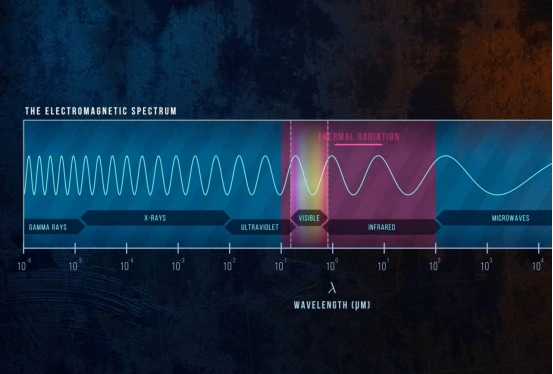
A heat source emits infrared electromagnetic waves due to its own temperature, with wavelengths typically ranging from 0.76 to 1000 micrometers, among which the thermal effect is most pronounced in the 0.76–40 micrometer wavelength band.
Electromagnetic waves are not absorbed when passing through air and directly irradiate the surfaces of objects (such as human bodies, floors, or equipment), where they are absorbed and converted into thermal energy.
After the surface of a heated object is warmed, heat is dissipated to the surrounding environment through secondary radiation, forming a uniform temperature field.
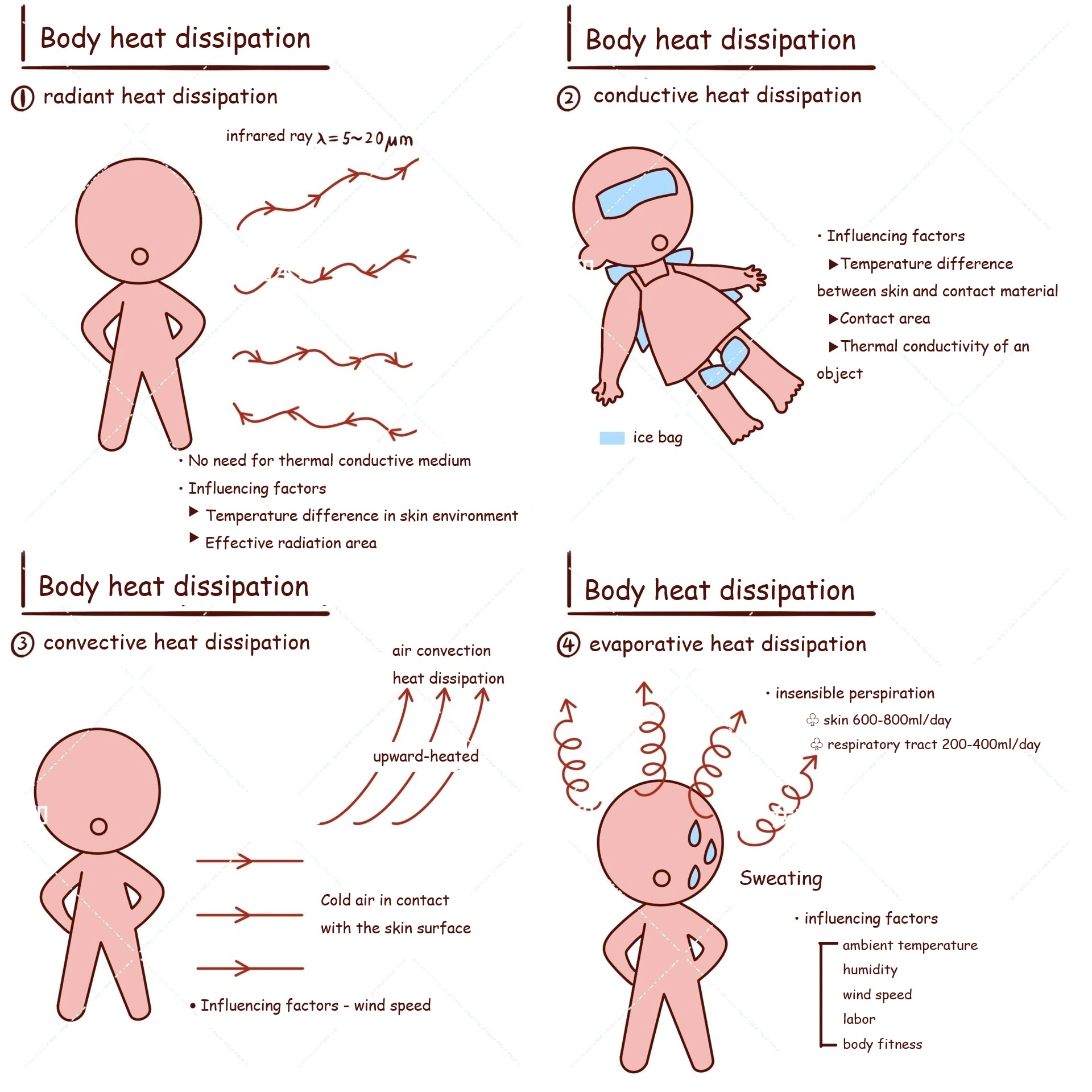
Heat conduction: requires direct contact between objects for heat transfer (e.g., boiling water in an iron pot).
Thermal convection: Heat transfer relies on fluid circulation (e.g., air, water) (e.g., heating air from air conditioning systems).
Radiant heating: Independent of the medium, heat propagates linearly in the form of electromagnetic waves, conforming to the inverse square law of light (distance doubled, illuminance reduced to 1/4).
By energy type:
Electrical thermal radiation: such as infrared heating tubes, electric oven heating elements, and far-infrared heaters.
Gas radiation: Utilizes natural gas or liquefied gas combustion in radiant tubes to generate infrared radiation for heating large spaces such as factories and stadiums.
Typical application:
Industry: Painting and drying, steel heat treatment, food processing
Building: Floor radiant heating, ceiling/wall-mounted radiant heating
Outdoor: Portable gas heating stove, camping grill
Household appliances: Electric oven (primarily relies on thermal radiation for food heating)
Advantage:
Non-contact heating to avoid contamination;
High thermal efficiency (radiant tube system ≥90%)
Suitable for high temperatures (>1000°C), vacuum, or corrosive environments;
Capable of achieving precise zonal temperature control
Limit :
Modeling with complex furnace geometry requires substantial computational resources;
When used alone, the steam temperature exhibits significant fluctuations with load variations, necessitating its combination with a convective superheater.
Materials are prone to oxidation at high temperatures and require protection with heat-resistant alloys or ceramics.
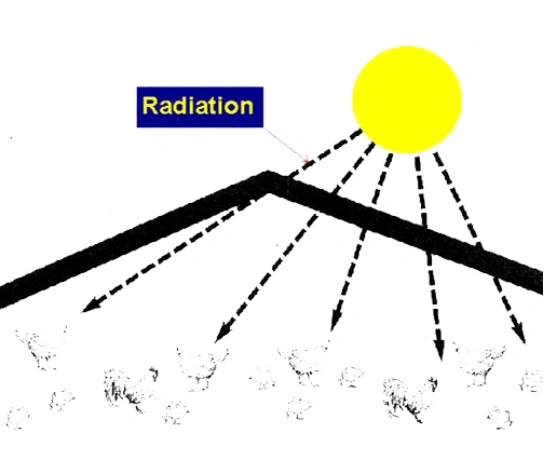
Fun fact: The sun heating Earth exemplifies natural radiant heating—infrared radiation penetrates the atmosphere and directly warms the surface, bypassing the air layer.
 English
  Spanish
  Russian