
ASTM D695 is a test method for determining the compressive properties of unreinforced and reinforced plastics. It is used in conjunction with the equivalent tensile test standard ASTM D638.
What does this standard measure?
ASTM D695 provides the compressive strength, compressive yield point, and modulus of a material. The standard specimen used for strength determination is an upright cylinder or prism with a length twice its principal width or diameter. If the specimen is too thin, buckling-resistance clamps should be used to prevent buckling.
The following property results and values for fiber-reinforced plastics can be determined by compression testing with a compression support according to ASTM D695, particularly according to variants developed according to ASTM D695 (EN 2850 Method B, SACMA SRM-1R-94, Boeing BSS 7260 Type III & IV):
Compressive stress: The compressive force associated with the initial cross-section of the specimen.
Compressive strain: The change in gauge length relative to the initial gauge length in the direction of load (see below only when a suitable measurement system is used).
Compressive modulus: The slope of the stress-strain diagram over a specified strain range within the elastic range. Also known as the elastic modulus or Young’s modulus.
Compressive strength: The maximum compressive stress the specimen withstands during the compression test.
Testing Machines for ASTM D695
Materials Testing Systems ASTM D695 can be performed on single-column or double-column universal testing machines (such as those available in the DF22 and DF23 series), depending on the maximum expected force.
End-loading compression tests on unidirectional carbon fiber reinforced composites using the standard specimen geometry can now achieve maximum forces of approximately 50 kN. Since compression tests are typically performed alongside tensile tests—where the required forces are even higher—it is advisable to use a static testing machine with a capacity of 100 kN or 250 kN.
However, if only glass fiber reinforced composites are being tested, a 50 kN testing machine is sufficient.
Testing Fixtures for ASTM D695
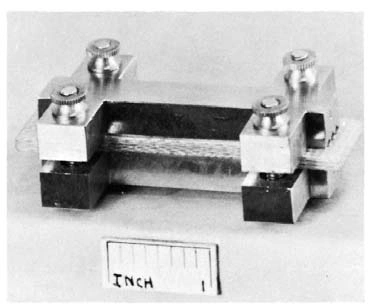
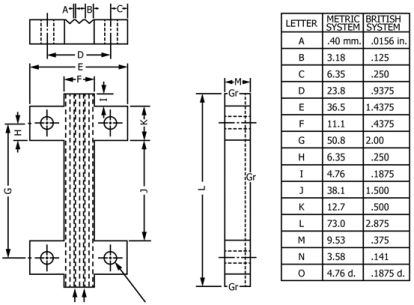
ASTM D695 requires the use of a support jig for specimens thinner than 3.2 mm. The supported specimen is then installed in a suitable compression fixture (also referred to as a subpress or compression tool).
For advanced composite testing variants of ASTM D695—such as EN 2850 Method B, SACMA SRM-1R-94, and Boeing BSS 7260—the support jig is rigidly integrated with the compression fixture. This integrated design effectively prevents tilting or buckling of the specimen and jig assembly during testing.
 English
  Spanish
  Russian