
With the rapid development of the hydrogen energy industry and research on high temperature structural materials, the safety of materials in high temperature hydrogen environments has attracted increasing attention.
Whether they are high-temperature components of hydrogen-blended steam turbines, or key materials in hydrogen engines and hydrogen transmission equipment, they must remain stable and reliable in high-temperature and high-pressure hydrogen.
However, hydrogen aggravates the embrittlement effect of materials at high temperatures; the processes of crack initiation and propagation can be significantly accelerated, leading to early structural failure.
Can we faithfully replicate the harsh service environments of these pieces of equipment in the laboratory and systematically study material performance in hydrogen environments?
The answer is affirmative. In response to the above needs, SINOTEST Equipment Co., Ltd. has developed a **900°C High-Temperature and High-Pressure Hydrogen Environment Test Facility** (hereinafter referred to as “the Equipment”).
It provides researchers with a controllable, stable and traceable extreme experimental platform, solving the testing difficulty of replicating the “high-temperature and high-pressure hydrogen” service environment in a laboratory setting.
The equipment can operate stably in a hydrogen environment at up to 900 °C and 3 MPa, offering unique conditions for studying the mechanical behavior of materials under extreme conditions.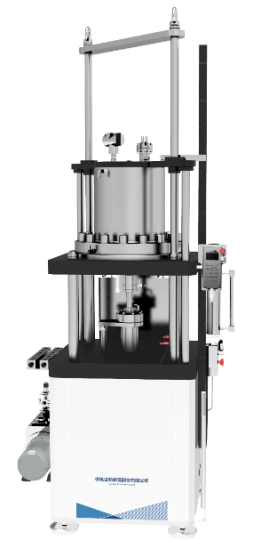
Its development provides important support for the safety of the hydrogen energy industry chain, aerospace material validation, and the development of high-temperature alloys.
The core capability of the equipment is first reflected in the high-fidelity reproduction and precise control of extreme environments.
The equipment can maintain a stable ambient temperature of 900℃ with a fluctuation of less than ±2℃, providing a stable and reliable experimental foundation for the study of high-temperature service performance of materials. Meanwhile, the gas circuit and sealing system of the equipment can withstand high-pressure hydrogen up to 3 MPa.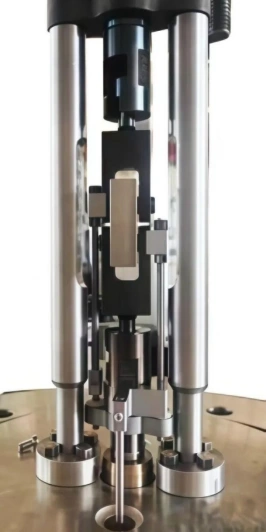
The apparatus is equipped with high-temperature grip.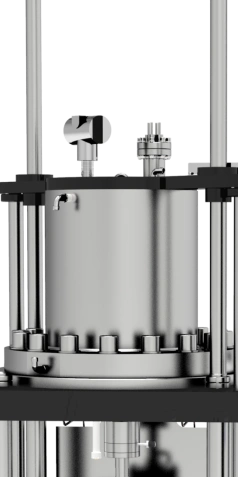
High-Temperature and High-Pressure Environment Apparatus
The stable coupling of high temperature and high-pressure hydrogen provides a solid foundation for researchers to comprehensively evaluate the mechanical response and failure risk of materials under extreme conditions.
 English
  Spanish
  Russian