ASTM D624 Tear Strength of Conventional Vulcanized Rubber and Thermoplastic Elastomers
This testing method describes methods for determining the tear strength or tear resistance of vulcanized rubber or thermoplastic elastomers. For standard-compliant testing in accordance with ASTM D624, it is essential to purchase the complete standard. (For further methods for determining the tear resistance of elastomers please refer to ISO 34-1/-2.) ASTM D624 only talks about methods for determining the tear strength of elastomers. The determination of mechanical properties of rubber in the tensile test, such as tensile stress, tensile strength and strain at break should be checked within ISO 37, DIN 53504 and ASTM D412.
Objective and Applications
Tests are reproducible and comparable regardless of the respective test laboratory. It defines the requirements for specimen geometry, test speed, conditioning and the evaluation of the results. The standard is applied wherever elastomers are used and mechanical stress from cracks poses a critical risk, such as in the automotive industry, rubber manufacturers or medical devices.
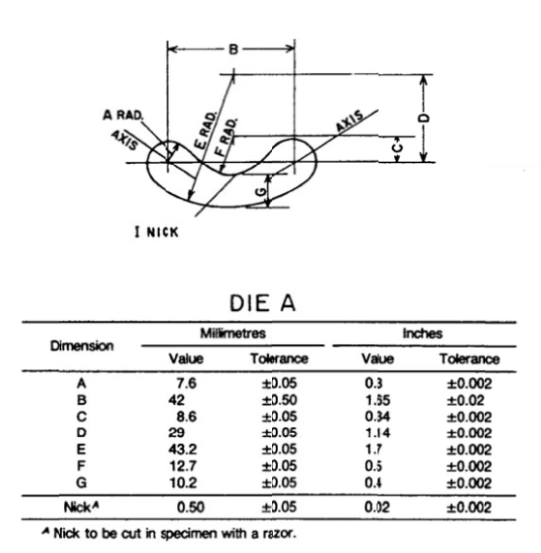
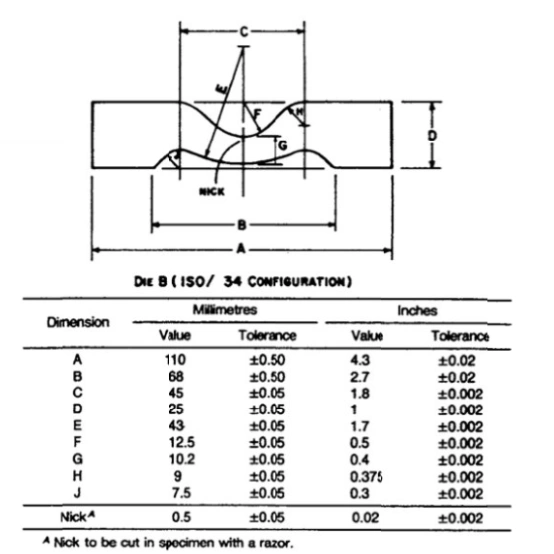
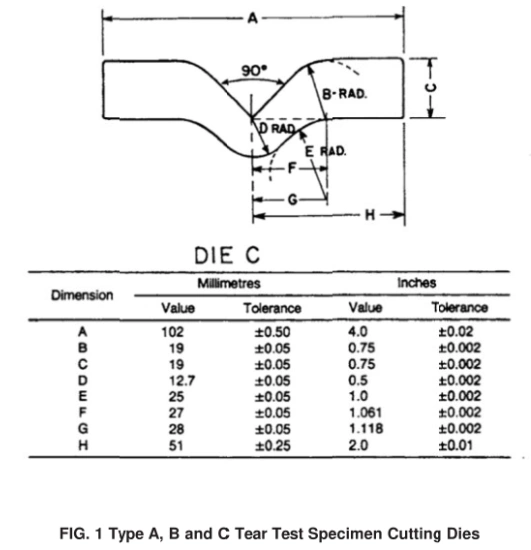
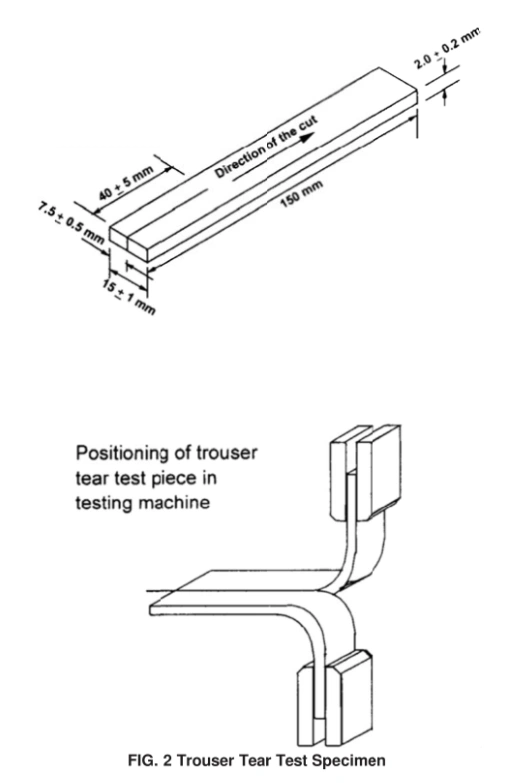
Specimen
Test results
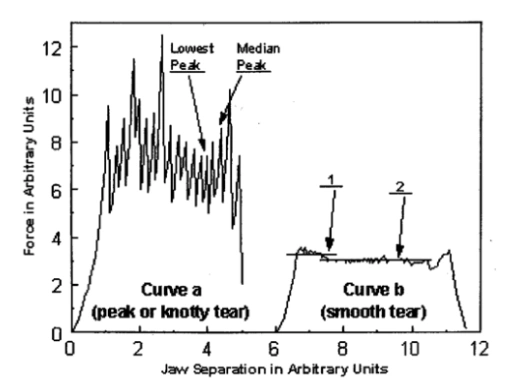
Curve a in Fig below illustrates a characteristic tear commonly called ‘knotty tear’. The word ‘knotty’ designates a large magnitude transient increase in tearing force followed by a precipitous decrease. With this type of tear,the increase- decrease process repeats in a cyclic fashion.Each increasing force stage eventually produces a rapid tear rupture which relieves concentrated stress and increases torn length. Just as the maximum force reached before tearing is a measure of tear strength, the level to which the force decreases before tear pauses also indicates important compound tear properties.
Curve b illustrates a typical ‘smooth tear’ curve with minimal tear force amplitudes between the tear initiation force and the tear pause force.