Extreme Environment Column (II) | SINOTEST High-Temperature and High-Pressure Hydrogen Environment Testing Machine Solves the Difficulties of Extreme Hydrogen Environment Testing
SINOTEST 900℃ high-temperature and high-pressure hydrogen environment testing machine overcomes the difficulties of extreme hydrogen environment testing, enabling the extreme hydrogen service environment to be reproduced in the laboratory.
With the rapid development of the hydrogen energy industry and research on high-temperature structural materials, increasing attention has been paid to the safety of materials in high-temperature hydrogen environments.
Key materials used in high-temperature components of hydrogen-blended steam turbines, hydrogen engines and hydrogen transmission equipment are all required to maintain stability and reliability under high-temperature and high-pressure hydrogen conditions. However, hydrogen can exacerbate the embrittlement effect of materials at elevated temperatures, significantly accelerating the initiation and propagation of cracks, and thereby inducing premature structural failure.
Can we truly reproduce the severe service environment of such equipment in a laboratory, and systematically carry out research on material properties in hydrogen environments?
The answer is affirmative. In response to the above requirements, SINOTEST Equipment Co., Ltd. has developed a 900 ℃ high-temperature and high-pressure hydrogen environment testing machine (hereinafter referred to as “the Equipment”). It provides researchers with a controllable, stable and traceable extreme experimental platform, and solves the testing challenge of reproducing the service environment of high-temperature and high-pressure hydrogen under laboratory conditions.
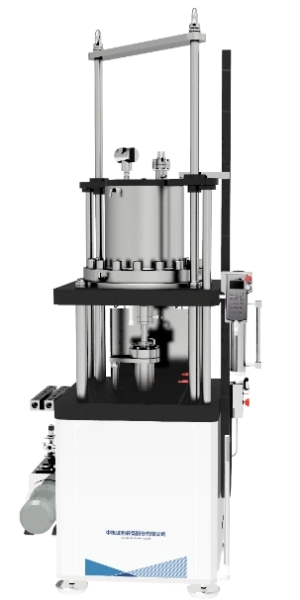
The equipment is capable of stable operation in a hydrogen atmosphere at temperatures up to 900℃ and a pressure of 3 MPa, offering unique conditions for studying the mechanical behavior of materials under extreme conditions.
Its application provides crucial support for the safety of the hydrogen energy industrial chain, verification of aerospace materials, and the development of superalloys.
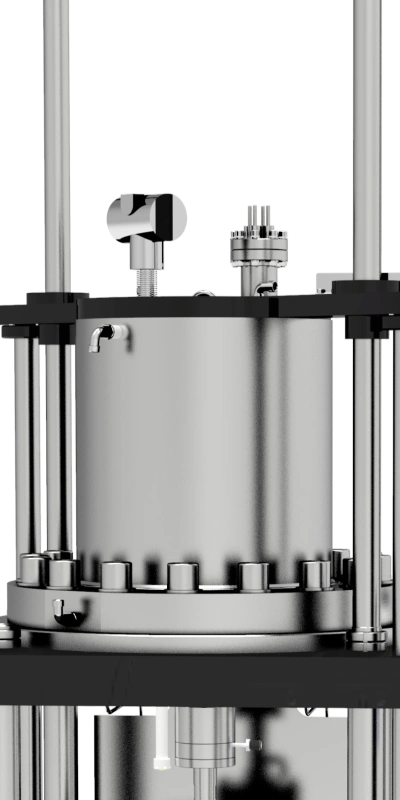
Stably reproduce extreme environments and lay a solid foundation for testing.
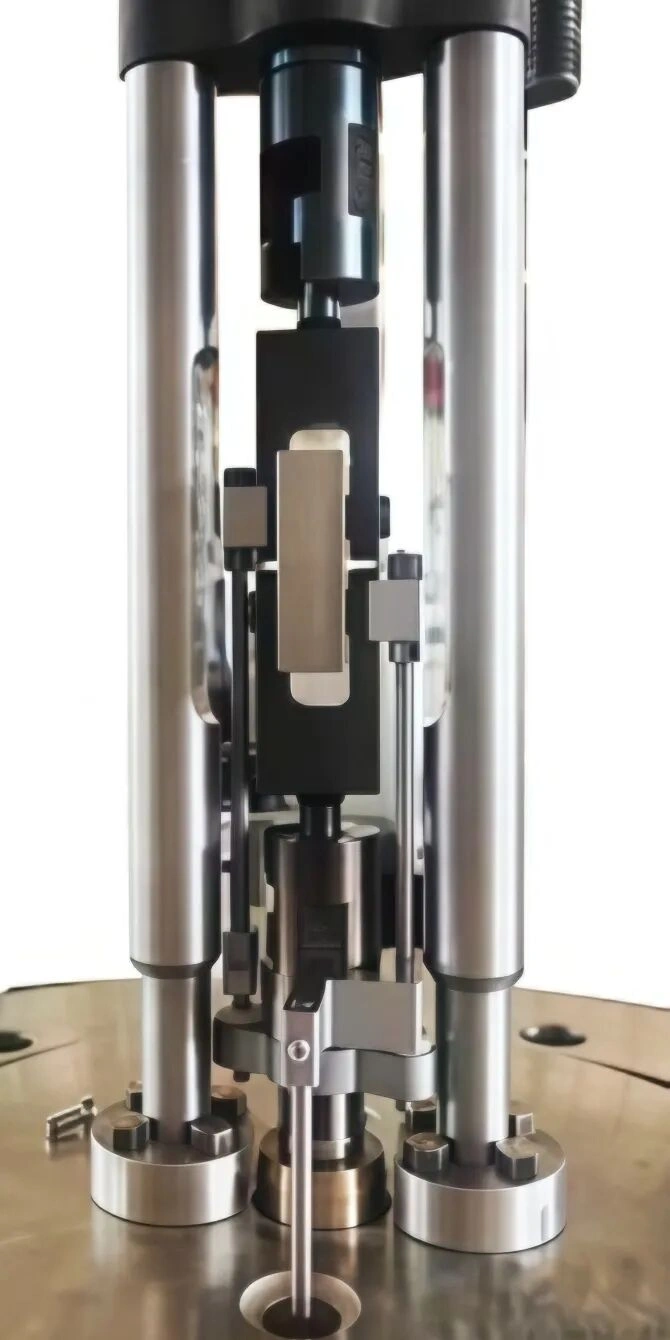
The device is equipped with high-temperature grips. High-temperature and High-pressure Environmental Chamber
Stable coupling of high temperature and high-pressure hydrogen provides a solid foundation for researchers to comprehensively evaluate the mechanical response and failure risk of materials under extreme conditions. Full coverage of loading modes meets the requirements for multi-field coupling testing.
In terms of mechanical loading and experimental capabilities, the facility supports multiple loading modes including tension, compression, bending and fatigue, meeting the multi-field coupling testing requirements of materials under high-temperature hydrogen environments.
Researchers can not only investigate the high-temperature strength and plasticity of materials, but also explore phenomena such as creep and stress relaxation during long-term service.
All experiments of the equipment can be conducted under a digital control system, with fully closed-loop control of mechanical loading and environmental parameters, ensuring test repeatability and data reliability.
Crack propagation and extension, revealing the mechanism of hydrogen-induced embrittlement of materials.
The facility features unique capabilities in crack growth testing, enabling both fatigue crack growth and stress corrosion crack growth tests.
Under cyclic loading, researchers can accurately determine the acceleration effect of hydrogen on the crack growth rate and reveal the mechanism of hydrogen-induced embrittlement, providing direct data support for the establishment of life prediction models and the evaluation of fracture toughness.
At present, the equipment has been stably applied in the Hydrogen Energy Materials and Safety Laboratory of Tianjin University, accurately reproducing the most stringent operating conditions encountered by the core components of hydrogen energy systems in actual operation.
The facility is providing in-depth support for a number of cutting-edge research projects at the university in the fields of hydrogen energy safety and materials, accelerating the transition of high-performance, high-safety hydrogen energy materials from fundamental laboratory research to engineering application.
With the deepening of hydrogen energy utilization, the reliability of materials under extreme environments will remain a key focus of ongoing attention in scientific research and engineering.The 900 ℃ high-temperature and high-pressure hydrogen environment test facility will continuously support researchers in revealing the behavioral mechanisms of materials in complex service conditions, advance the development and application of new materials, and underpin energy security and engineering innovation.