ASTM D3574 Standard Test Methods for Flexible Cellular Materials—Slab, Bonded, and Molded Urethane Foams
ASTMD 3574 apply to slab, bonded, and molded flexible cellular products known as urethane foams. Urethane foam may be generally defined as an expanded cellular product produced by the interaction of active hydrogen compounds, water, and isocyanates.
Summary of Test methods
Test A Density Test
Test B1 Indentation Force Deflection Test—Specified Deflection
Test B2 Indentation Force Deflection Test—Specified Force
Test C Compression Force Deflection Test
Test D Constant Deflection Compression Set Test
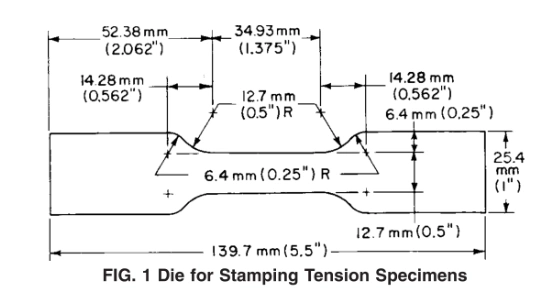
Test E Tensile Test
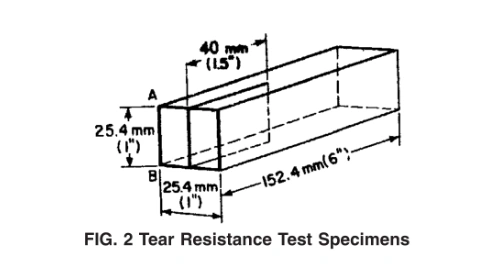
Test F Tear Resistance Test
Test G Air Flow Test
Test H Resilience (Ball Rebound) Test
Test I1 Static Force Loss Test at Constant Deflection
Test l2 Dynamic Fatigue Test by the Roller Shear at Constant Force
Test I3 Dynamic Fatigue Test by Constant Force Pounding
Test I4 Dynamic Fatigue Test for Carpet Cushion
Test J Steam Autoclave Aging
Test K Dry Heat Aging
Test L Wet Heat Aging
Test M Recovery Time
ASTM D3574 test A
Both ISO 845 and ASTM D3574 test A describe the determination of the apparent density of a flexible foam specimen by calculating it from the mass and volume of the specimen; it is given kg/m3.
ASTM D3574 test B
Test B1 Indentation Force Deflection is described as a test in which the force is measured, which is required to create certain indentations in foam with a specified compression of 25% and 65%. The hardness determined is given as a force in Newtons (also known as IFD values) at 25% and 65%. Its standard specimen to is removed from a specific section of the finished product and has dimensions of at least 380mm*380mm*100mm.
Test B2 Indentation Residual Gauge Length: For this test, the primary interest is in determining how thick foam upholstery should be to ensure comfortable seating for the average person. It measures the residual gauge length (thickness) of the foam specimen that is retained after loading with a defined force of 4.5N, 110N and 220N. The results are indicated in mm as IRGL values. It states that the finished product (molded foam) should be tested if possible, as long as this can be done on a flat surface.
ASTM D3574 test C
It describes the compression force deflection test on flexible foam for determination of the compression force. It measures the force required to achieve 50% compression over the entire surface of the defined foam specimens, which is a minimum dimension of 50*50*25mm. (Larger specimens are preferable) The surface should be at least 2500mm2 and have a minimum thickness of 20mm.