
In key sectors including aerospace, marine engineering, new energy and rail transit, major equipment is accelerating toward higher speed, larger scale and application under more extreme conditions. Long-life fatigue testing of full-size materials and components has become a core critical step to guarantee the operational reliability of such equipment.
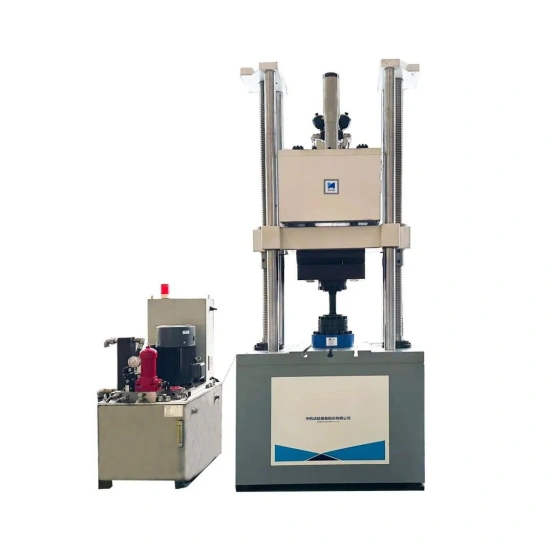
Responding to urgent industry demands, SINOTEST has independently developed the first domestically built electro-hydraulic servo resonance fatigue testing machine in China. It creatively integrates the high-frequency response advantage of electro-hydraulic servo technology with the load-amplifying characteristic of resonance technology, redefining the performance boundaries and green energy-saving standards of high-end fatigue testing equipment. This instrument serves as a highly efficient and ideal solution for advancing material testing technologies and the development of testing methodologies.
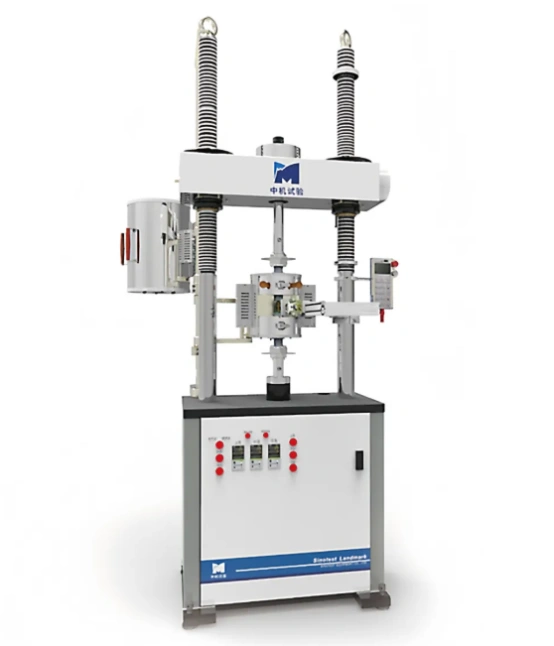
As a professional-grade equipment designed to meet full-size and long-life testing requirements, its key performance indicators have all reached international advanced levels.
- High-Precision Load, Independently Controllable
Both the maximum static load and cyclic load capacity reach **≥ 1000kN**, with all key technologies **independently developed and controllable**. The machine adopts a high-rigidity frame with a **150% safety overload rate**. It is equipped with a high-precision, independently developed spoke-type bidirectional force sensor, which also provides **150% safety overload capacity**. Its effective load capacity is suitable for diversified large-tonnage tests and supports **customized capacity expansion** (2000kN, 3000kN, 5000kN and above) to meet the testing requirements of large-scale components.
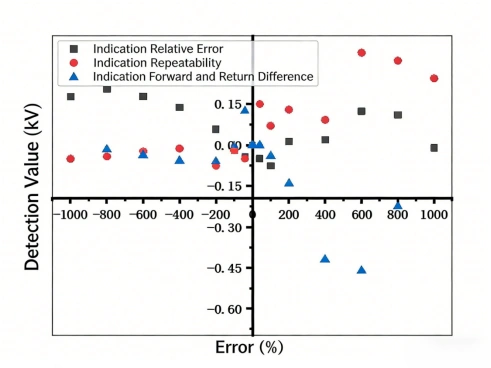
Figure 1: Schematic Diagram of Test Errors
- Wide Frequency Response, High-Efficiency Testing
It enables high-load, low-power consumption tests at high frequencies. Equipped with a high response hydrostatic bearing actuator, the effective test frequency ranges from 0.1 Hz to 300 Hz.
The equipment features fast response, high control accuracy, wide frequency bandwidth and support for multiple test waveform control. It greatly shortens the cycle accumulation time of fatigue tests, significantly improves testing efficiency and reduces test costs.
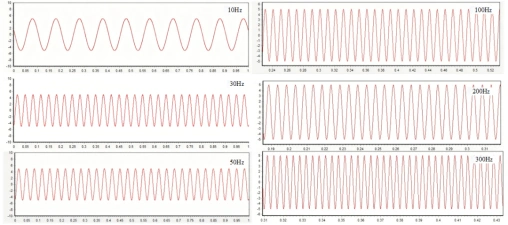
Figure 2: Different Loading Frequencies
- Resonant Loading, Optimal Choice for Energy Saving
The resonance amplification factor can reach as high as over 200 times, realizing an efficient loading mode of “small input, large output”.
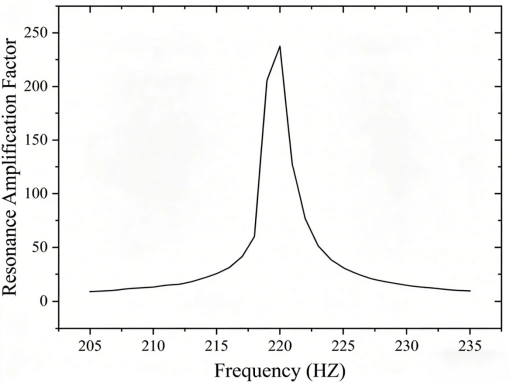
Figure 3: Resonance Amplification – Frequency Response Curve
It achieves ultra-high cyclic load loading with ultra-low energy consumption. A compact hydraulic power unit is sufficient to meet the test requirements of large tonnage and high frequency response.
As shown in the figure below, the relatively small cyclic force generated by the hydrostatic cylinder is resonantly amplified to a large cyclic load, truly achieving the test goal of **high efficiency and high return with low investment**.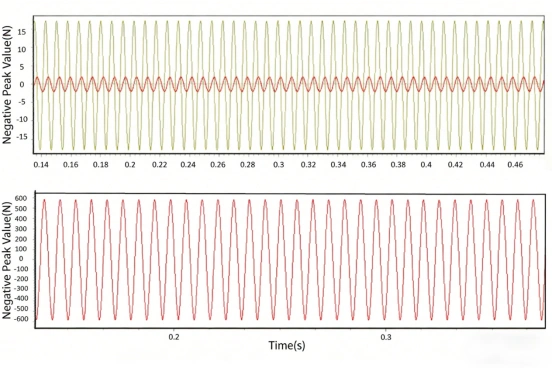
Figure 4: Schematic Diagram of Resonance Amplification Effect
Under the same test preconditions, compared with traditional electro-hydraulic servo testing machines, the electro-hydraulic servo resonance fatigue testing machine adopts a smaller hydraulic power unit.By effectively amplifying the load through resonance, it realizes the test capability featuring small displacement, high frequency response and large tonnage.It significantly lowers energy consumption, drastically shortens test duration, and fully aligns with the development philosophy of green manufacturing.
- Multi-domain Adaptability, Comprehensive Functions
It is equipped with a brand-new digital controller, high-frequency servo valve and hydrostatic bearing linear actuator. The fully self-developed dedicated controller and test software support multiple algorithms and efficient protection, featuring simple operation, high stability and reliability. The equipment supports customized loading and special environment testing, fully covering mechanical performance testing of metallic materials, composite materials, large structural parts and other specimens. It can meet the testing demands of various industries and fields, including aerospace, marine vessels, rail transit and more.
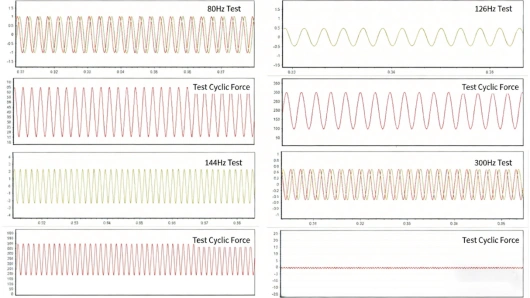
Figure 5: Test curves of various specimens at different frequencies
Relying on the innovation of four key technologies to form a core technical system, it provides a high-precision, high-stability, adaptive testing environment.
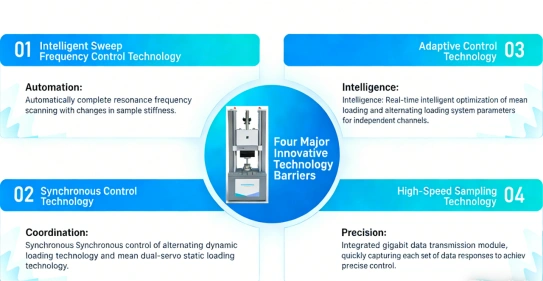
Figure 6: Four Major Innovations
1.Intelligent Sweep Frequency Control Technology
The equipment can automatically complete resonance frequency scanning, record core parameters such as frequency and load peak values in real time, accurately calculate the amplification factor and resonance point, and provide optimal initial conditions for test startup. The entire process requires no repeated manual adjustments, significantly improving test preparation efficiency.
2.Synchronous Control Technology
It adopts dual servo motors to drive the crossbeam. Without additional sensors, it compensates for motor displacement deviations in real time through high-speed system calculations, ensuring the synchronous and precise operation of the dual motors, and perfectly realizing the test function of synchronous control for alternating dynamic loading and mean dual-servo static loading.
3.Adaptive Control Technology
To address the issue of load value drift/attenuation caused by sample stiffness attenuation during testing, it dynamically adjusts parameters through independent control channels, synchronously monitors deviations in the load amplification factor, and optimizes the adjustment speed in real time, ensuring stable and reliable data throughout the test.
4.High-Speed Sampling Technology
It innovatively adopts an integrated Ethernet interface, paired with a gigabit Ethernet module, to fully leverage the advantages of the hardware system, enabling ultra-high-speed data acquisition and transmission. It accurately captures the subtle changes in each set of load-displacement responses, achieves precise control of data processing, and ensures zero error in test data.
1.Breakthrough from Tradition
It thoroughly overcomes the technical contradiction of traditional testing equipment in the current market: “large load comes with low frequency, high frequency comes with small load”. With resonance amplification technology and a compact hydraulic system, it simultaneously achieves the dual goals of large-tonnage load and high-frequency response testing. That is, high-frequency dynamic tests can still be performed under large-load conditions, and the higher the sample load, the more prominent the equipment’s advantages in energy saving and efficiency.
2.Cost Optimization
The load resonance amplification effect greatly reduces the ultimate performance requirements for the hydraulic power unit and servo valves, effectively cutting down equipment investment costs. During operation, energy consumption is significantly lower than that of traditional equipment. Equipped with a user-friendly human-machine interaction system, it can save considerable operation, maintenance and labor costs in long-term use.
3.Stable Adaptability
Adopting a high-rigidity structural design and fatigue-rated actuating mechanism, the equipment ensures stable operation in continuous high-cycle tests. The automatic mean value control technology intelligently adapts to the stiffness variation of the sample during fatigue testing, and completes dynamic parameter calibration without interrupting the test.
4.Human-Machine Interaction
Integrating a dedicated control system and an intuitive human-machine interface, it supports functions such as test parameter presetting, real-time data visualization and automatic report generation. It simplifies the operation process, lowers the operational threshold for users, and meets the requirements of technical archiving.
 Russian
  English
  Spanish