
Pressure resistant & burst testing machine
Carbon Black Content Tester
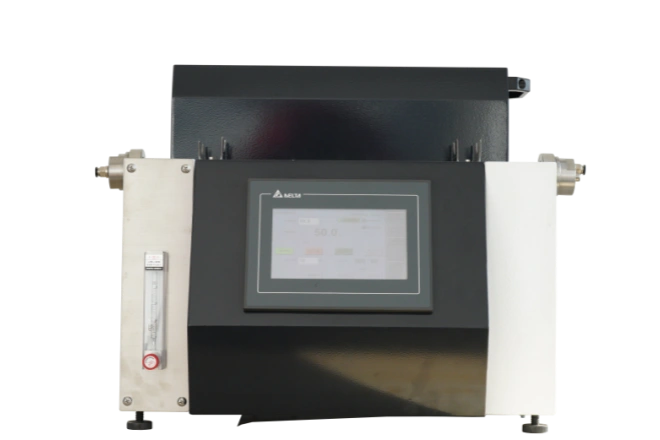
The JSW-G1001 carbon black content tester is a device used to determine the carbon black and ash content in materials such as plastics and rubber, and is suitable for testing materials such as plastics and rubber. It adopts high-temperature decomposition gravimetric analysis or thermogravimetric analysis (TG) under nitrogen protection, which complies with standards such as GB/T 13021. This device is used in the plastic industry to evaluate the dispersion and content of carbon black. As the amount of carbon black filling increases, the tensile strength and impact performance of the material will sharply decrease. It is necessary to adjust the filling amount according to the role of carbon black in the material to ensure that the material properties (such as heat resistance, rigidity, and dimensional stability) meet the requirements
Application: suitable for the determination of carbon black content in polyethylene, polypropylene, and polybutene plastics
Standard: GB/T 2951.8, GB/T 13021, JTG E50 T1165, IEC 60811-4-1, ISO 6964.
Carbon black
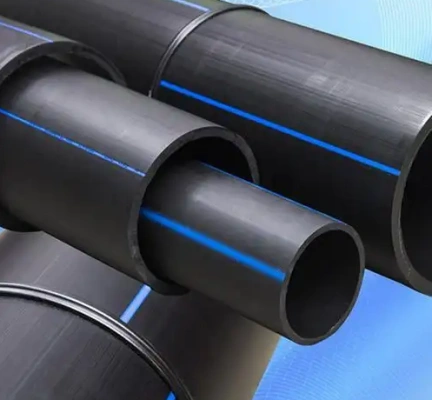

- 4-digit digital display, displaying the current temperature, setting the temperature, and can set 30 temperature program segments.
- Integrated design of the heating furnace body and control system,convenient for instrument management.
- The temperature program segment is manually input and automatically stored. After successful saving, users only need to press a button to start it.
- Manual switching of nitrogen and oxygen gas instruments, equipped with high-precision floating ball gas flow meters.
- Nano blanket (new insulation material)achieves excellent insulation and constant temperature
Диапазон температур: комнатная температура ~ 1000 ℃
Combustion tube size: Ø 30mm * 500mm
Heating element: resistance wire
Display mode: digital tube display
Temperature control method: PID programmable control, automatic memory temperature setting section
Working power supply: AC220V/50HZ/60HZ
Rated power: 1.5KW
Host size: length 305mm, width 475mm, height 475mm
Usage | Carbon black content (in 100% plastic) |
polyethylene plastic |
|
Wire and cable (insulation) | 2.75 |
Tube and extruded molded products | 2.5 |
Injection molded plastic | 1.00 |
Thin film and foreskin | 1.00 |
Phenolic resin model material | 1.50 |
Polyvinyl chloride and its copolymers |
|
Album | 2.00 |
Molded products | 1.50 |
Compressed molded products | 1.50 |
Hard pipes and molded parts | 2.50 |
Plastic pipe | 1.50 |
■FOB
■CIF
■Package: Wooden case
The important application and influence of carbon black additives in PE pipes
Application and Challenges of PE Pipe
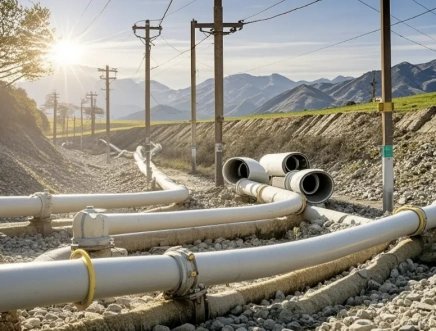
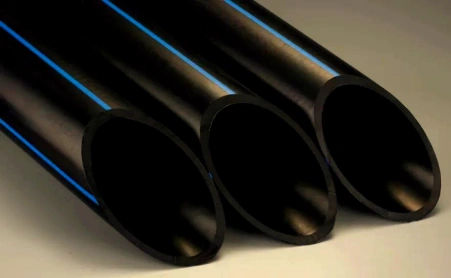
Polyethylene (PE) pipes and fittings have been widely used in various fields such as tap water, municipal construction, industrial factories, and agricultural irrigation due to their excellent low-temperature impact resistance, flexibility, and corrosion resistance. However, in the actual production, and use process, the pipes will face high temperature environments or direct sunlight outdoors, which can accelerate the decomposition and aging of the pipes, thereby shortening their service life. To address this issue, we have introduced a special additive – carbon black – to enhance the weather resistance of PE pipes.
The function and source of carbon black
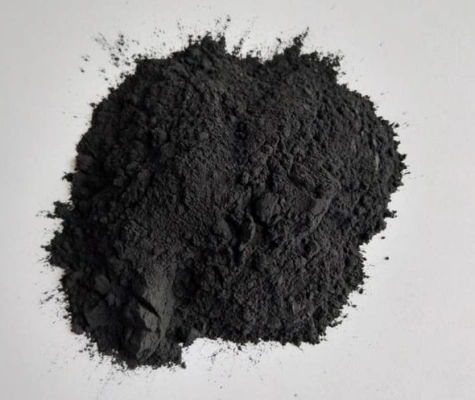
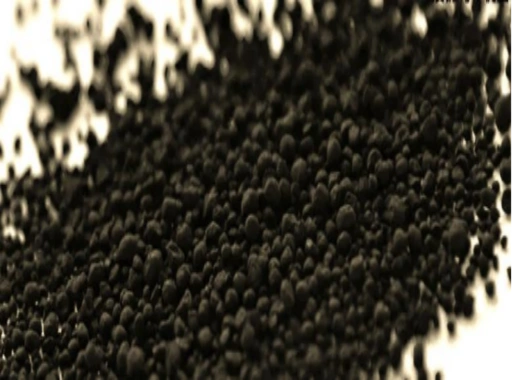
Carbon black, a common additive, is widely used in plastic products to enhance their weather resistance. By adding carbon black, the anti-aging performance of PE pipes can be significantly improved, so that they can remain stable under high temperature or direct sunlight, thus extending their service life. Carbon black, a black powdery carbon material, is made from petroleum by-products, natural gas, or coal through a series of chemical reactions such as incomplete combustion or pyrolysis. It plays a crucial role in multiple industries such as rubber, coatings, and inks, and is often used as a pigment and filler. It should be noted that during the manufacturing process of carbon black, a small amount of impurities may inevitably be mixed in, mainly including incompletely oxidized carbon particles and ash content. In the production of PE pipes, carbon black is used as an important UV stabilizer, aiming to significantly improve the weather resistance of pipelines.
Application of carbon black in PE pipes
Carbon black plays a crucial role in the production process of PE pipes. It is not only used as a key UV stabilizer, but also significantly improves the weather resistance of pipelines. By adding carbon black, the aging resistance of PE pipes has been significantly enhanced, thus extending their service life. In addition, carbon black can improve the processing performance of PE pipes, making them smoother in the production process.
After adding carbon black to PE pipes, a uniform layer of carbon black will be formed, which can effectively absorb and scatter ultraviolet rays, significantly reducing the damage of ultraviolet rays to PE pipes. At the same time, carbon black can enhance the oxidation resistance of PE pipes, prevent their aging and cracking, and thus extend their overall service life. In this way, carbon black greatly improves the anti-aging performance of plastic products.
The Importance and Selection of Carbon Black
In order to ensure the quality and performance of PE pipes, the selection of carbon black must comply with relevant national standards and specify the specific indicators of carbon black based on actual usage needs.
Carbon black content:
In order to effectively block ultraviolet rays, the content of carbon black in PE pipe materials needs to be controlled within the range of 2-5%.
Carbon black particle size:
In order to ensure uniform dispersion of carbon black in PE pipe materials, its particle size should be as fine as possible, usually between 20-50 nanometers.
Ash content of carbon black:
The ash content of carbon black, which is the total amount of non carbon substances, including inorganic salts and other non combustible residues, directly affects the performance of PE pipes. Therefore, in order to ensure the stability of PE pipe performance, it is generally required that the ash content of carbon black be controlled below 5%.
Related industry standards
- GB/T 18251-2019″Method for the assessment of pigment or carbon black dispersion in polyolefin pipes, fittings and compounds”: This standard elaborates on the method for determining the carbon black content in polyolefin pipe materials and is applicable to polyolefin pipe materials such as PE, PP, PB, etc.
- GB/T 13663-2017 “Polyethylene(PE) piping systems for water supply”: This standard provides comprehensive regulations on polyethylene (PE) water supply pipe materials, including classification, requirements, test methods, etc. It specifically points out that the carbon black content in PE100 and PE80 grade pipe materials should be controlled within the range of 0% to 5%.
- GB/T 1558.2-2023 “Buried polyethylene(PE) piping systems for the supply of gaseous fuels—Part 2: Pipes”: This standard also provides detailed regulations on buried polyethylene (PE) pipe materials, covering classification, requirements, test methods, etc. It also emphasizes that the carbon black content in PE100 and PE80 grade pipe materials should be maintained at 0% to 5%.
 Russian
  English
  Spanish