
Electric Fatigue Testing Machines
Системы испытаний на электрическую усталость
ГЛАВНАЯ>>Системы динамического тестирования>>Electric Fatigue Testing Systems
Electric Fatigue Testing Machine
Electric Fatigue Testing: Compact, Integrated, High-Precision
SINOTEST’s electric fatigue testing machine delivers versatile, low-noise dynamic testing for materials and components. Specifically engineered for a compact footprint and high component integration, the system ensures precision and reliability across diverse applications—from biomedical research to consumer electronics. With a dynamic load capacity of up to 100 kN, this efficient, clean electrodynamic solution is ideally suited for low-load fatigue testing. In addition, the system features an intuitive interface for visual test setup, real-time monitoring, and comprehensive data processing. As a result, its advanced design architecture guarantees both experimental accuracy and long-term repeatability.
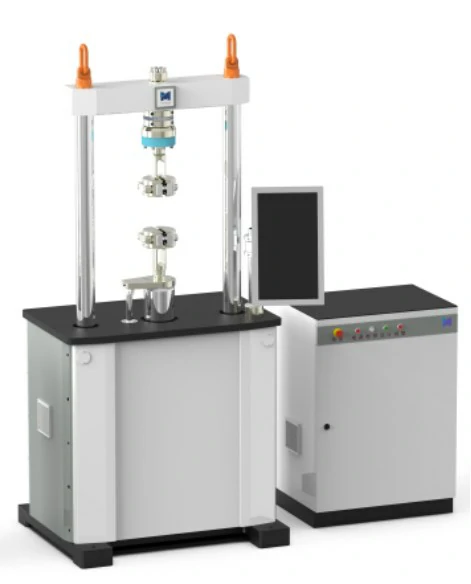
Electric Fatigue Testing Machine Specifications
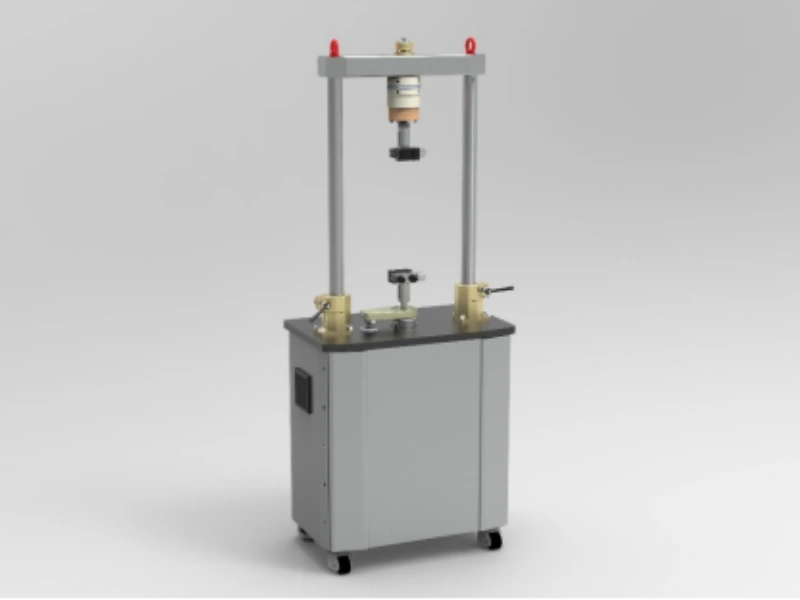
Capacity: 10-100KN, 0.1-15Hz
Model: DDPL-10 / DDPL-30 / DDPL-50 / DDPL-100
Приложение:
- Dynamic Mechanical Analysis (DMA)
- Tension
- Torsion
- Small load test
- Fatigue test
Test Workpiece:
- Polymers: Elastomeric Materials, Elastomers, Plastics, Polymers, Rubber
- Biomaterials and Medical Devices
- Composites: Carbon Fiber, Ceramic Matrix Composites, Composites, Metal Matrix Composites, Polymer Matrix
- Ceramics
- Consumer Products & Packaging
Test Standards:
- ISO 14801, ISO 6475, ASTM F1717, ASTM F2077, ISO 7206
Technical Specification
No. | Technical Name | Technical Indicator |
1 | Max. Static Test Force | ±10kN |
2 | Max. Dynamic Test Force | ±8kN |
3 | Recommended Dynamic Test Force | ≤±8kN |
4 | Test Force Measurement Range | 4-100%FS |
5 | Load Static Measurement Accuracy | ≤±0.5% of indicated value |
6 | Load Dynamic Measurement Accuracy | ≤±2.0% of indicated value |
7 | Actuator Displacement Stroke | ±100mm |
8 | Displacement Measurement Accuracy | ≤±0.5% of indicated value (Calibrated from 10% FS) |
9 | Test Frequency Range | 0.01-15Hz |
10 | Effective Column Span | 615mm |
11 | Vertical Test Space (Room Temp. Fixture Gap) | 50-200 mm |
12 | Overall Dimensions (W×D×H) | 1100×650×2300 mm |
13 | Weight | Approx. 650 kg |
No. | Technical Name | Technical Indicator |
1 | Max. Static Test Force | ±30kN |
2 | Max. Dynamic Test Force | ±24kN |
3 | Recommended Dynamic Test Force | ≤±24kN |
4 | Test Force Measurement Range | 4-100%FS |
5 | Load Static Measurement Accuracy | ≤±0.5% of indicated value |
6 | Load Dynamic Measurement Accuracy | ≤±2.0% of indicated value |
7 | Actuator Displacement Stroke | ±100mm |
8 | Displacement Measurement Accuracy | ≤±0.5% of indicated value (Calibrated from 10% FS) |
9 | Test Frequency Range | 0.01-15Hz |
10 | Effective Column Span | 615mm |
11 | Vertical Test Space (Room Temp. Fixture Gap) | 50-200 mm |
12 | Overall Dimensions (W×D×H) | 1100×650×2300 mm |
13 | Weight | Approx. 800 kg |
No. | Technical Name | Technical Indicator |
1 | Max. Static Test Force | ±50kN |
2 | Max. Dynamic Test Force | ±40kN |
3 | Recommended Dynamic Test Force | ≤±40kN |
4 | Test Force Measurement Range | 4-100%FS |
5 | Load Static Measurement Accuracy | ≤±0.5% of indicated value |
6 | Load Dynamic Measurement Accuracy | ≤±2.0% of indicated value |
7 | Actuator Displacement Stroke | ±100mm |
8 | Displacement Measurement Accuracy | ≤±0.5% of indicated value or 0.1mm, whichever is greater |
9 | Test Frequency Range | 0.01-15Hz |
10 | Effective Column Span | 615mm |
11 | Vertical Test Space (Room Temp. Fixture Gap) | 50-200 mm |
12 | Overall Dimensions (W×D×H) | 1100×650×2300 mm |
13 | Weight | Approx. 950 kg |
No. | Technical Name | Technical Indicator |
1 | Max. Static Test Force | ±100kN |
2 | Max. Dynamic Test Force | ±80kN |
3 | Recommended Dynamic Test Force | ≤±80kN |
4 | Test Force Measurement Range | 4-100%FS |
5 | Load Static Measurement Accuracy | ≤±0.5% of indicated value |
6 | Load Dynamic Measurement Accuracy | ≤±1.0% of indicated value |
7 | Actuator Displacement Stroke | ±100mm |
8 | Displacement Measurement Accuracy | ≤±0.5% of indicated value or 0.1mm, whichever is greater |
9 | Test Frequency Range | 0.01-15Hz |
10 | Effective Column Span | 615mm |
11 | Vertical Test Space (Room Temp. Fixture Gap) | 50-300 mm |
12 | Overall Dimensions (W×D×H) | 1100×645×2300 mm |
13 | Weight | Approx. 1150 kg |
The Electric Fatigue Series Testing Machine includes a range of products such as uniaxial axial loading test models, tension‑torsion composite synergistic loading test models, and benchtop models. By matching different environmental devices and tooling fixtures, it can achieve a wide variety of application tests.
For room‑temperature applications, standard mechanical fatigue fixtures are provided. With this configuration, the machine can perform tension, compression, and fatigue tests on standard material specimens (bars/plates) under ambient conditions. Additionally, hydraulic or pneumatic fixtures may be selected to accommodate different specimen requirements.
When equipped with high‑temperature fixtures and corresponding environmental devices, the system performs fatigue tests under elevated temperature conditions. These include tension tests on threaded bars and pin‑hole plates, as well as compression tests on threaded bars.
Similarly, for high/low‑temperature testing, the machine can be configured with appropriate fixtures and environmental chambers. This setup enables tension (threaded bars/pin‑hole plates) and compression (threaded bars) fatigue tests on standard material specimens across a wide thermal range.
*Note: Standard material specimens should comply with the relevant requirements of Chapter 5 of GB/T 3075‑2008 “Metallic Materials – Fatigue Testing – Axial Force‑Controlled Method,” Chapter 6 of GB/T 15248‑2008 “Metallic Materials – Axial Constant Amplitude Low‑Cycle Fatigue Testing Method,” and Chapter 5 of GB/T 3354‑1999 “Test Method for Tensile Properties of Oriented Fiber‑Reinforced Plastics.”*
Finally, the Electric Fatigue Series Testing Machine is equipped with a comprehensive safety alarm system, enabling unattended operation during tests. The software allows upper and lower limit protections to be set independently for load and displacement; if exceeded, the host machine will stop working to ensure test safety. On the hardware side, the system monitors motor phase loss, motor overcurrent, and emergency stops. Should any of these protections be triggered, the system will automatically alarm or shut down.
▪FOB
▪CIF
▪Упаковка: Деревянный ящик
Download Catalog
Grip Types
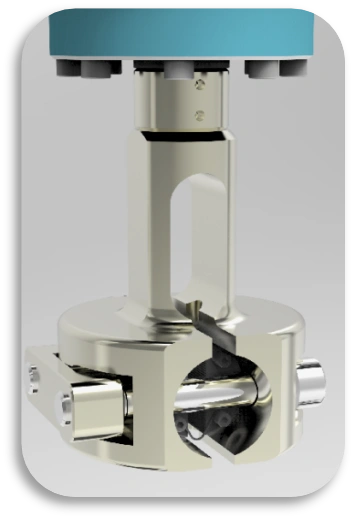
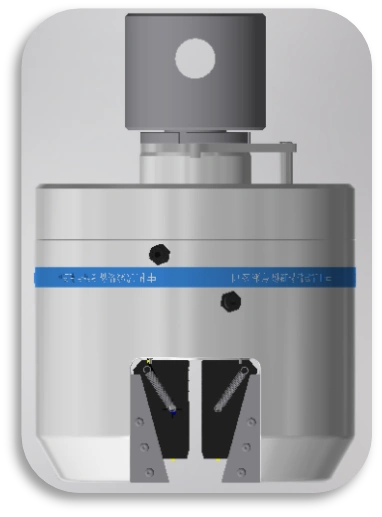
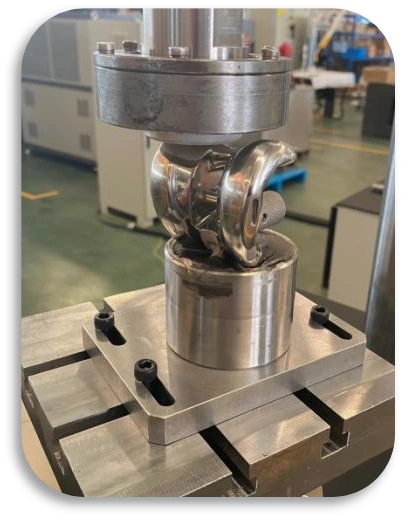
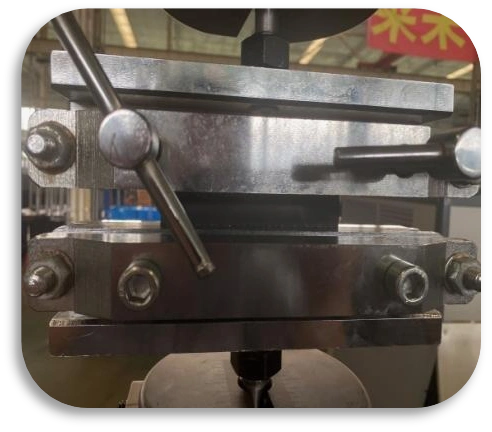
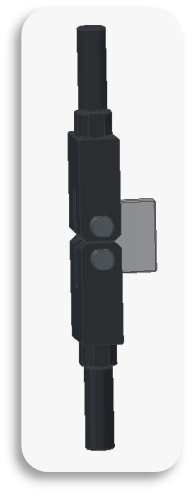
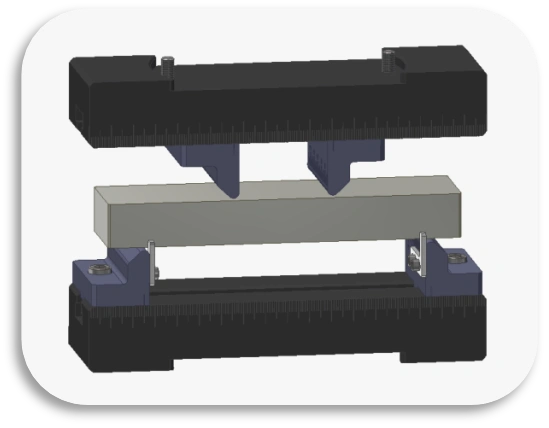
Sinotest specializes in designing and customizing grips based on your requirements. With years of expertise in the field of testing machines, we offer mature design solutions for mainstream grips. Moreover, if you have specific needs, our design team is dedicated to creating tailored solutions to meet a diverse range of requirements.
Application Standard
GB/T 2611-2007 “General requirements for testing machines”
GB/T 228.1-2010 “Metallic materials-tensile testing-Part 1:Method of test at room temperature”
JJG 556-2011 “Axial Force Fatigue Testing Machines”
GB/T 26076-2010 “Axial-force-controlled fatigue testing method”
GB/T 3075-2008 “Metallic materials-Fatigue testing-Axial Force controlled method”
GB/T 26077-2010 “Metallic materials-Fatigue testing-Axial strain controlled method”
GB/T 15248-2008 “Metallic-Axial constant amplitude low-cycle fatigua testing method”
GB/T 3354-1999 “Test method for tensile properties of oriented fiber-reinforced plastics”
ASTM F543 Mechanical Testing of Metallic Medical Bone Screws Under Torsion and Axial Loads
ASTM F1717 Standard Test Methods for Spinal Implant Constructs in a Vertebrectomy Model
ASTM F2077 Standard Test Methods for Intervertebral Body Fusion Devices
ISO 7206 Guide to Cyclic Fatigue Testing of Artificial Hip Implant Prostheses
ISO 14801 a method of dynamic testing of single post endosseous dental implants of the transmucosal type in combination with their premanufactured prosthetic components
ISO 6475 Metal bone screws with asymmetrical thread and spherical under-surface — Mechanical requirements and test methods
Project Case
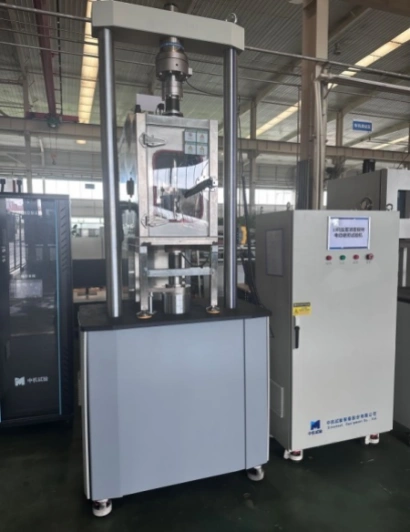
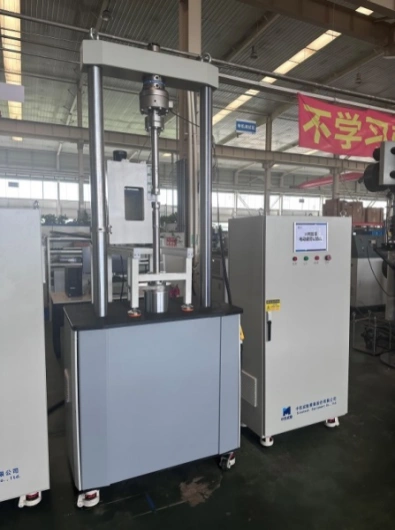
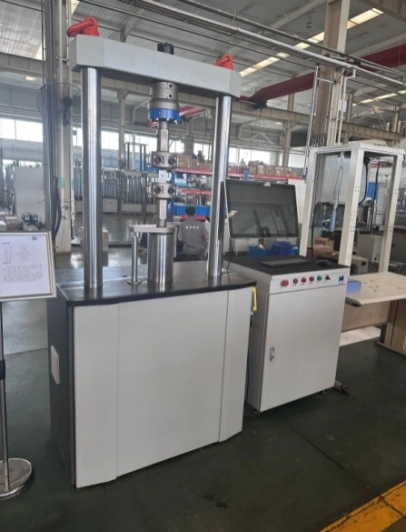
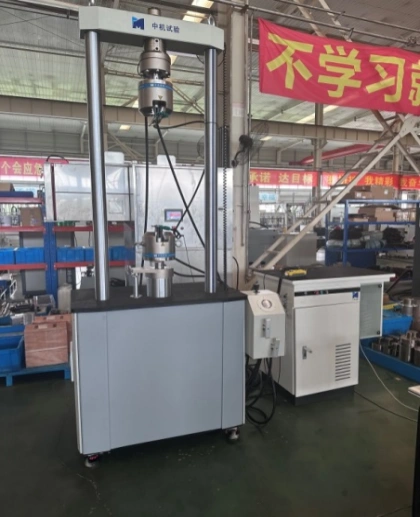
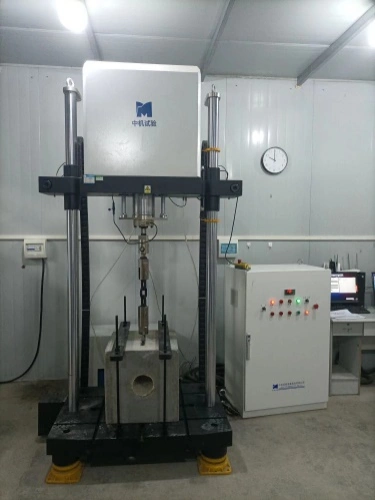
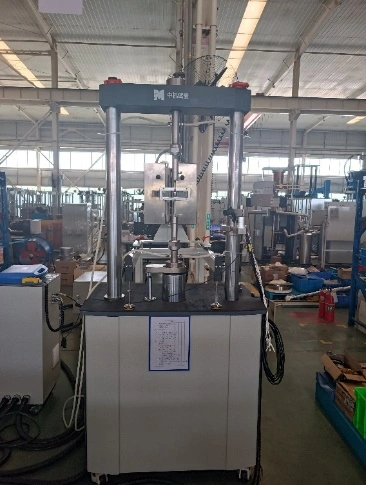
Application Areas
Biomedical field: fatigue testing for applications such as skeletal activity simulation and vascular stents.
In the construction and power grid sector, fatigue testing covers embedded channels, anchoring adhesives, road surfaces, and insulators.
For special environments, the system can be equipped with environmental testing devices to perform fatigue tests on high‑temperature and ice samples.
Automotive applications include fatigue testing of pedals, car doors, lithium batteries, and bellows.
Within the aerospace field, bending fatigue testing is performed on engine blades, honeycomb panels, and specialty materials.
Additionally, electric cylinders may serve as unit components in applications such as cross‑tensioning and seismic bracing.
Electric Cylinder
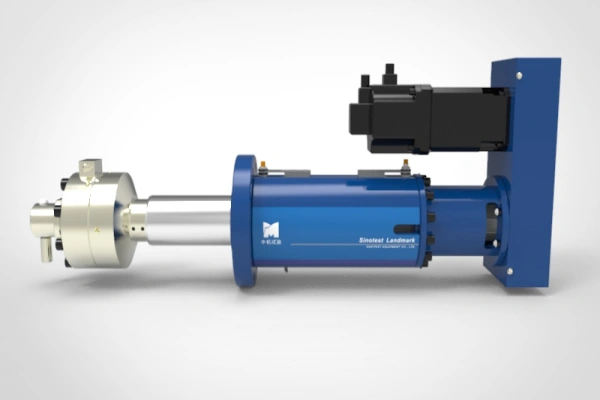
The electric servo loading cylinder features three control modes: load, displacement, and deformation. Additionally, it can achieve sinusoidal loading and is used in tensile and compression testing systems for metallic or non-metallic materials. Moreover, it ensures both the accuracy and stability of static loading force values while achieving high linear velocity dynamic loading frequencies. Furthermore, the loading frame can be flexibly constructed to achieve various loading installation methods, making it an ideal product for research institutions and laboratories.
Тензодатчик
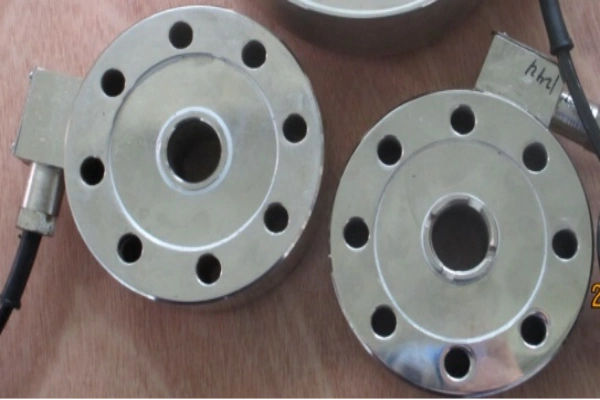
The load cell uses a spoke-type high-rigidity cell manufactured by our company, which has high resistance to lateral forces and high frequency response. Our load cells are widely used in dynamic testing applications. When used with a measurement and control system, the measurement accuracy is ±0.5%FS, with an accuracy range of 1%-100%.
The load cell features:
High accuracy, suitable for both dynamic and static applications, and good tensile/compressive consistency.
Integral sealing, stable and reliable performance.
Low output sensitivity, good rigidity, and long lifespan.
Safe load ±120%.
Response time: ≤3ms.
High Precision Control System
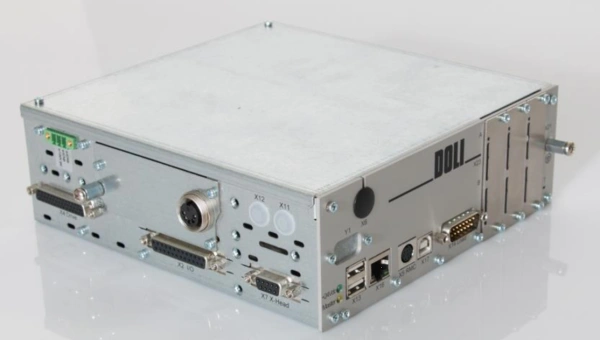
This system offers high cost-effectiveness and integrates data acquisition with closed‑loop control in a single testing instrument. Specifically, it is widely employed in dynamic and static testing setups as both a measurement channel and a foundational testing tool. Furthermore, its powerful functionality and stable performance have led to broad adoption across the domestic market. Indeed, this controller represents a powerful, latest‑generation electronic solution dedicated to full closed‑loop control and data acquisition for materials and structural testing.
 Russian
  English
  Spanish