
Pressure resistant & burst testing machine
Home >> non-metallic-testing-machines>>Carbon Black Dispersion Detector
Carbon Black Dispersion Detector

JS3600L Carbon Black Dispersion Detector, it us used to detect the dispersion of pigment & carbon black in polyolefin pipes, fittings, and compounds.
Carbon black is a good UV stabilizer, it is the best light absorber and light shielding agent, which can effectively improve the UV resistance and anti-aging performance of plastic products; The content of carbon black and its dispersion in plastic media have a decisive impact on the UV protection, mechanical properties, and lifespan of plastic products.
By measuring the scale, morphology, and dispersion of carbon black particles, it can establish the intrinsic relationship between these parameters and macroscopic performance indicators such as mechanical properties, anti-static properties, and moisture absorption properties. This will have a positive impact on the quality assurance, production process, and new product development of plastic materials, while promoting the rapid improvement of enterprise and industry technological levels.
Standard: GB/T 18251-2019, ISO 18553, ASTM D5596-2003
Workpiece: polyolefin pipes, fittings, and compounds
Carbon black
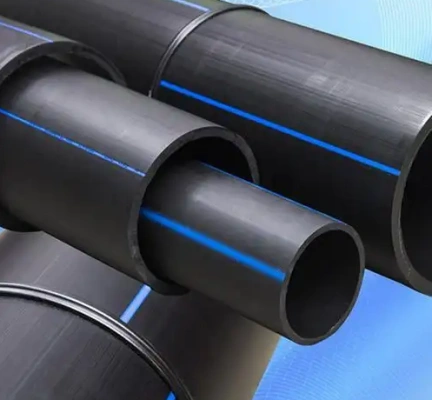
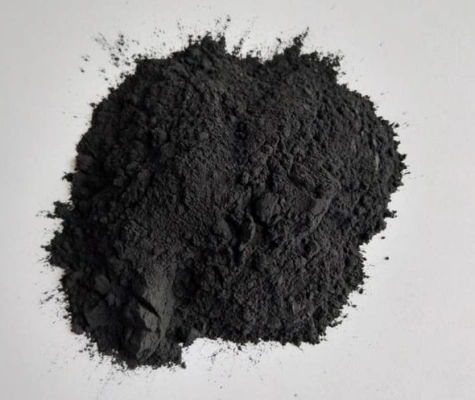

- Wide range of particle size distribution, spanning from micrometer to millimeter.
- Adopting a domestically produced biological microscope, coupled with a 5-megapixel CMOS image sensor, the image resolution is greatly improved.
- It has the function of moving the ruler and can measure at any two points.
- Automatically segment adhesive particles, click on the particle image to display the measurement parameters of the particle.
- Adopting USB 2.0 data interface, it has stronger compatibility with microcomputers. The instrument is separated from the computer and can be equipped with any computer with a USB interface; Desktop, laptop, and mobile PC are all acceptable.
- Able tosave a single particle image.
- Extremely powerful data reporting and statistical functions. Support various forms of data result report formats.
- The software is compatible with various operating systems such as WIN7, WINXP, VISTA, WIN2000, etc.
- Adapt to screens of various resolutions.
- Software personalization, providing measurement guides and many other functions to facilitate user operation; The measurement results output rich data, saved in the database, can be called and analyzed with any parameters such as operator name, sample name, date, time, etc., and can be shared with other software to achieve data sharing.
- The instrument has a beautiful appearance, small size, and light weight.
- High measurement accuracy, good repeatability, and short measurement time.
Considering the confidentiality requirements of the test results, only authorized operators can access the corresponding information.
- Database reading and processing of data.
- Measurement principle: Image analysis method
- Measurement range: 0.5 μ m to 10000 μ m
- Measurement and analysis time: less than 3 minutes under normal conditions (from the beginning of measurement to the display of analysis results).
- Reproducibility: 3% (volume averaged diameter)
- Particle size equivalence principle: equal area circle diameter and equivalent short diameter
- Particle size statistical parameters: volume (weight) and number of particles
- Imaging resolution: 2592 * 1944 (5-megapixel digital camera)
- Image size: 2592 × 1944 pixels
- Optical magnification: 100x
- Communication interface: USB interface
- Sample stage: 10 mm × 3 mm
- Power supply: 110-120/220-240V 0.42/0.25A50/60Hz (microscope)
- Pixel size of CMOS: 2592 × 1944
- Horizontal clarity: 800 lines
- Signal to Noise Ratio (S/N Ratio): greater than 52db
The carbon black dispersion analyzer combines modern electronic technology with microscopic method. It uses a camera to capture images of particles magnified by a microscope. After the image signal is entered into the computer memory, the computer automatically analyzes and calculates the scale (equivalent diameter, long/ short diameter, area, perimeter, etc.) and morphology (roundness, rectangularity, aspect ratio, etc.) of carbon black particle clusters, and provides a test report.
The optical microscope first magnifies the small particles to be measured and images them on the photosensitive surface of the CCD camera; The camera converts optical images into video signals, which are then transmitted through a USB data cable and stored in the computer’s processing system. The computer recognizes the edges of particles based on the received digitized microscopic image signals, and then calculates the relevant parameters of each particle according to a certain equivalent pattern. Generally speaking, an image (i.e. a field of view of an imaging device) contains several to hundreds of particles. The imaging instrument can automatically calculate the size and shape parameters of all particles within the field of view, and generate a test report through statistical analysis. When the number of particles already measured is insufficient, the microscope stage can be adjusted to switch to the next field of view, and testing can continue and accumulate.
Generally speaking, the particles being tested are not spherical, and the particle size we refer to is the equivalent diameter of a circle. In the imaging instrument, different equivalent methods can be taken according to customer needs, such as equal area circle, equivalent short diameter, equivalent long diameter, etc; Its advantages are: in addition to particle size measurement, it can perform general morphological feature analysis, which is intuitive and reliable.
■FOB
■CIF
■Package: Wooden case
The important application and influence of carbon black additives in PE pipes
Application and Challenges of PE Pipe
Polyethylene (PE) pipes and fittings have been widely used in various fields such as tap water, municipal construction, industrial factories, and agricultural irrigation due to their excellent low-temperature impact resistance, flexibility, and corrosion resistance. However, in the actual production, and use process, the pipes will face high temperature environments or direct sunlight outdoors, which can accelerate the decomposition and aging of the pipes, thereby shortening their service life. To address this issue, we have introduced a special additive – carbon black – to enhance the weather resistance of PE pipes.

The function and source of carbon black
Carbon black, a common additive, is widely used in plastic products to enhance their weather resistance. By adding carbon black, the anti-aging performance of PE pipes can be significantly improved, so that they can remain stable under high temperature or direct sunlight, thus extending their service life. Carbon black, a black powdery carbon material, is made from petroleum by-products, natural gas, or coal through a series of chemical reactions such as incomplete combustion or pyrolysis. It plays a crucial role in multiple industries such as rubber, coatings, and inks, and is often used as a pigment and filler. It should be noted that during the manufacturing process of carbon black, a small amount of impurities may inevitably be mixed in, mainly including incompletely oxidized carbon particles and ash content. In the production of PE pipes, carbon black is used as an important UV stabilizer, aiming to significantly improve the weather resistance of pipelines.
Application of carbon black in PE pipes
Carbon black plays a crucial role in the production process of PE pipes. It is not only used as a key UV stabilizer, but also significantly improves the weather resistance of pipelines. By adding carbon black, the aging resistance of PE pipes has been significantly enhanced, thus extending their service life. In addition, carbon black can improve the processing performance of PE pipes, making them smoother in the production process.
After adding carbon black to PE pipes, a uniform layer of carbon black will be formed, which can effectively absorb and scatter ultraviolet rays, significantly reducing the damage of ultraviolet rays to PE pipes. At the same time, carbon black can enhance the oxidation resistance of PE pipes, prevent their aging and cracking, and thus extend their overall service life. In this way, carbon black greatly improves the anti-aging performance of plastic products.
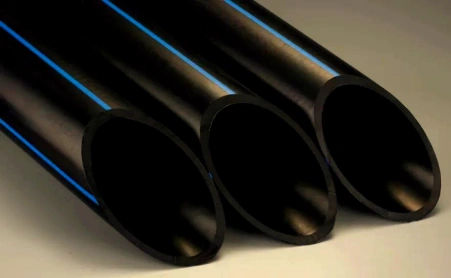
The Importance and Selection of Carbon Black
In order to ensure the quality and performance of PE pipes, the selection of carbon black must comply with relevant national standards and specify the specific indicators of carbon black based on actual usage needs.
Carbon black content:
In order to effectively block ultraviolet rays, the content of carbon black in PE pipe materials needs to be controlled within the range of 2-5%.
Carbon black particle size:
In order to ensure uniform dispersion of carbon black in PE pipe materials, its particle size should be as fine as possible, usually between 20-50 nanometers.
Ash content of carbon black:
The ash content of carbon black, which is the total amount of non carbon substances, including inorganic salts and other non combustible residues, directly affects the performance of PE pipes. Therefore, in order to ensure the stability of PE pipe performance, it is generally required that the ash content of carbon black be controlled below 5%.
Related industry standards
- GB/T 18251-2019″Method for the assessment of pigment or carbon black dispersion in polyolefin pipes, fittings and compounds”: This standard elaborates on the method for determining the carbon black content in polyolefin pipe materials and is applicable to polyolefin pipe materials such as PE, PP, PB, etc.
- GB/T 13663-2017 “Polyethylene(PE) piping systems for water supply”: This standard provides comprehensive regulations on polyethylene (PE) water supply pipe materials, including classification, requirements, test methods, etc. It specifically points out that the carbon black content in PE100 and PE80 grade pipe materials should be controlled within the range of 0% to 5%.
- GB/T 1558.2-2023 “Buried polyethylene(PE) piping systems for the supply of gaseous fuels—Part 2: Pipes”: This standard also provides detailed regulations on buried polyethylene (PE) pipe materials, covering classification, requirements, test methods, etc. It also emphasizes that the carbon black content in PE100 and PE80 grade pipe materials should be maintained at 0% to 5%.
 English
  Spanish
  Russian