ASTM D1525 Standard Test Method for VICAT Softening Temperature of Plastics
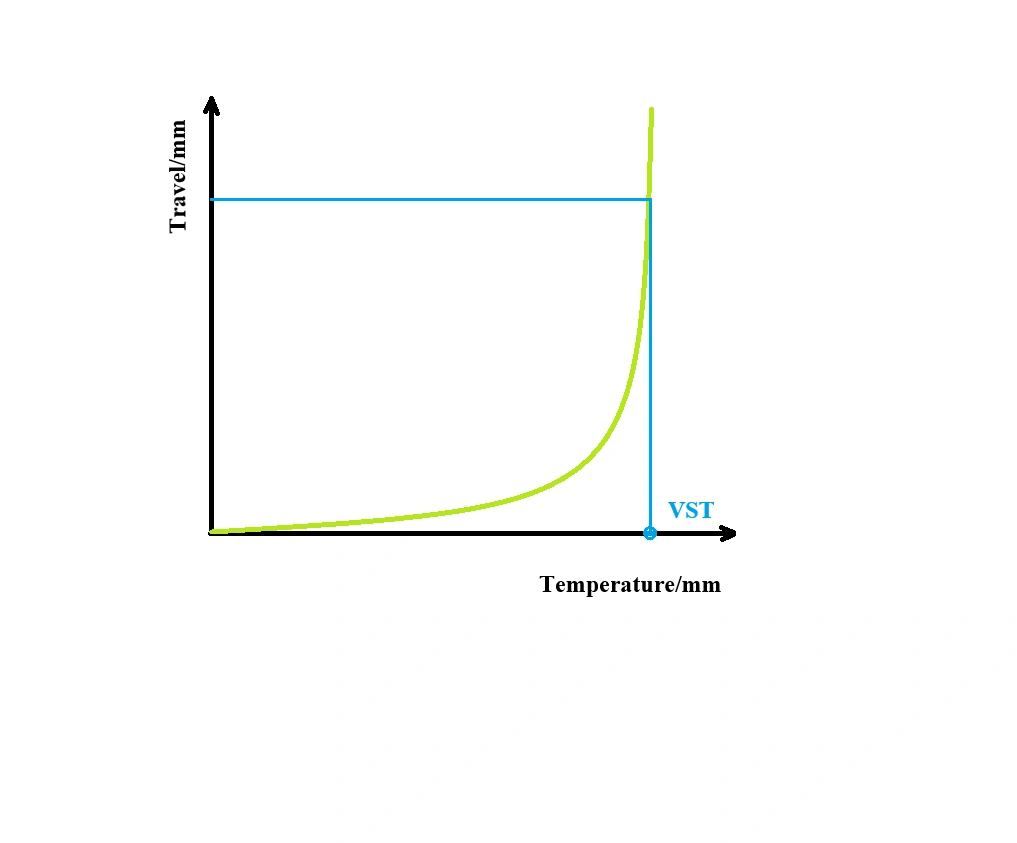
This test method covers determination of the temperature at which a specified needle penetration occurs when specimens are subjected to specified controlled test conditions. The reference method for uniform heat transfer is the oil bath. Other transmission media such as air or direct contact with a heating device are also possible. The VICAT Softening Temperature/ VST is interpreted as a temperature value at which a thermoplastic begins to change from a solid state to a melt.
Objective and applications
The VST and HDT provide important comparative values for plastics used in high-temperature environments:
In the area of product development, they can also serve as a reference point for the operating temperature range or for pre-selection of potentially suitable materials in relation to the temperatures at which they will be used;
In quality assurance, they help in showing differences in the quality of the material during manufacturing, or as a relative comparison value for the evaluation of possible plastics alternatives.
Specimen
Use at least two specimens to test each sample.The specimen shall be flat, between 3mm and 6.5mm thick, and at least 10 by 10mm in area or 10mm in diameter. If an individual layer of the specimen is less than 3mm, it is permissible to stack not more than 3 layers to achieve the minimum thickness. The specimens shall be cut from sheet or molded material. The type of mold and the molding process used to produce test specimens will affect the results obtained in the test. Molding conditions shall be in accordance with the standard for the material being tested or should be agreed upon between the cooperating laboratories.
Test procedure
ASTM D1525 specifies 20°C~23°C and allows temperatures up to 30°C.
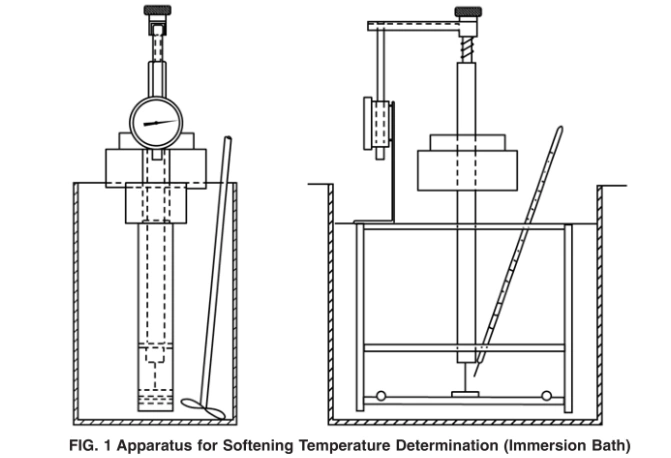
A needle-shaped Indenter with a round cross-sectional area of 1 mm2 is placed on the plastic specimen and loaded with a defined test weight. After the test weight is applied, the material begins to deform over time. This part of the deformation is undesirable and is minimized by zeroing the displacement measurement of the needle penetration after 5 minutes have passed. The specimen is then heated at a specified heating rate. The VST is determined when the needle penetration reaches a depth of 1 mm.